The purpose of Poetslife is to promote the art and discipline of American Tactical Civil Defense for families and small businesses and to contribute practical American civil defense preparedness guidance for all Americans through my articles in the The American Civil Defense Association (TACDA.ORG) Journal of Civil Defense and leadership as the volunteer Vice President of TACDA.

11/04/2006

Carroll County MD Links


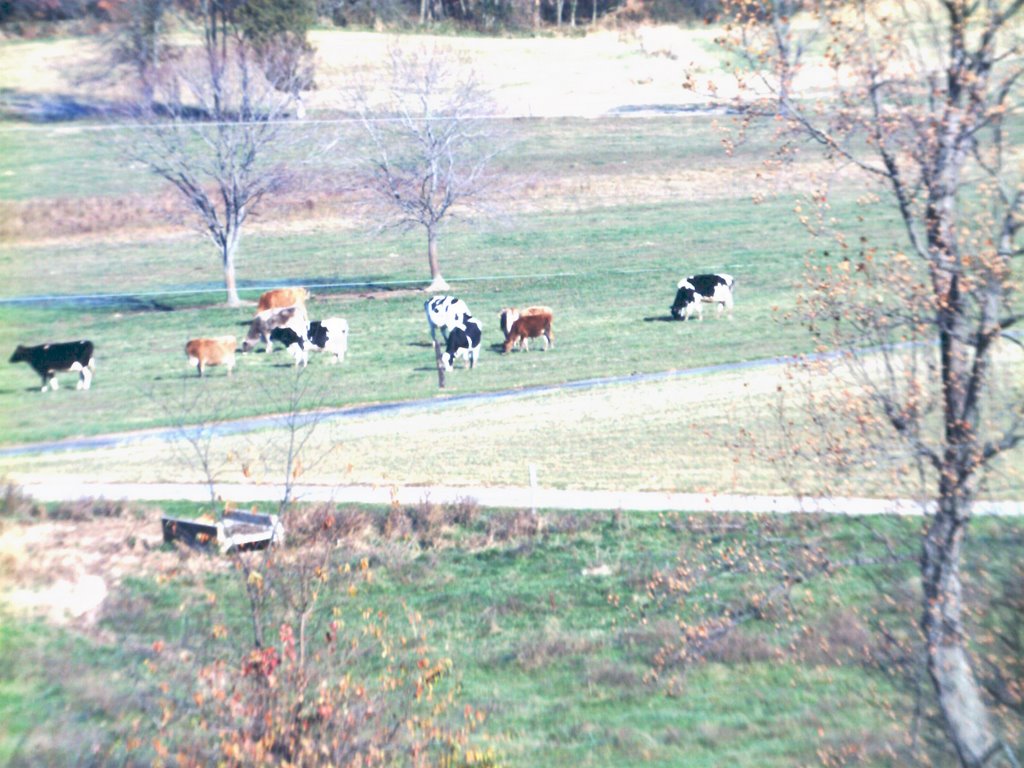
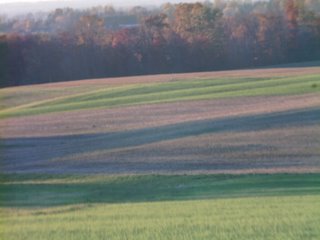
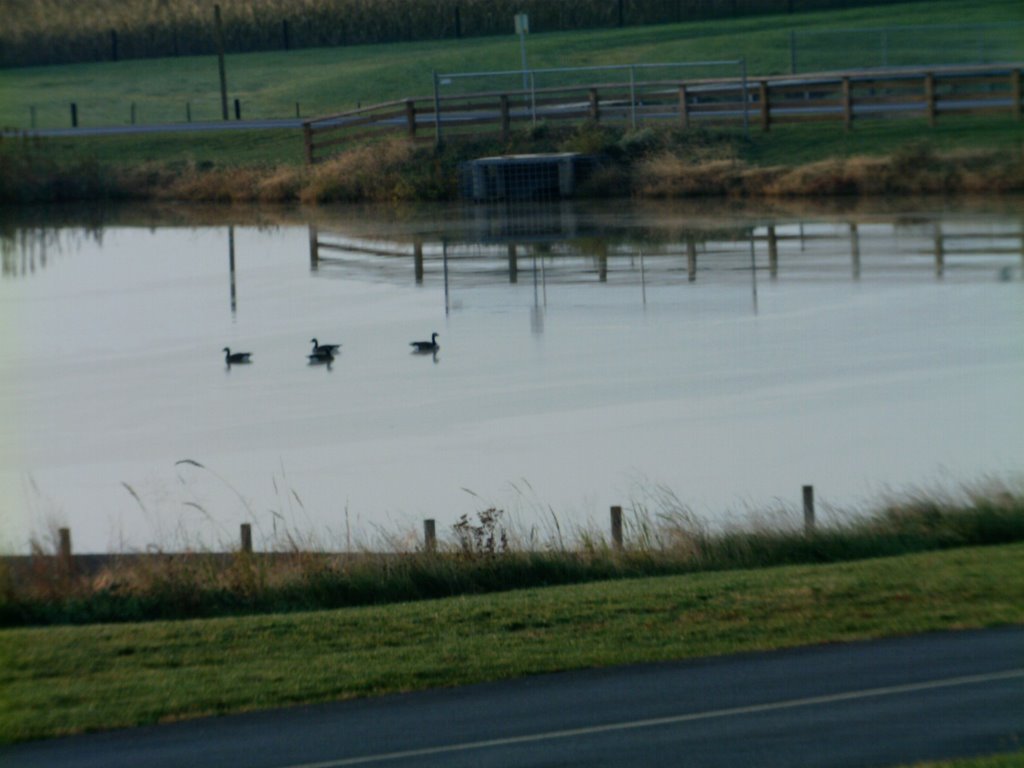
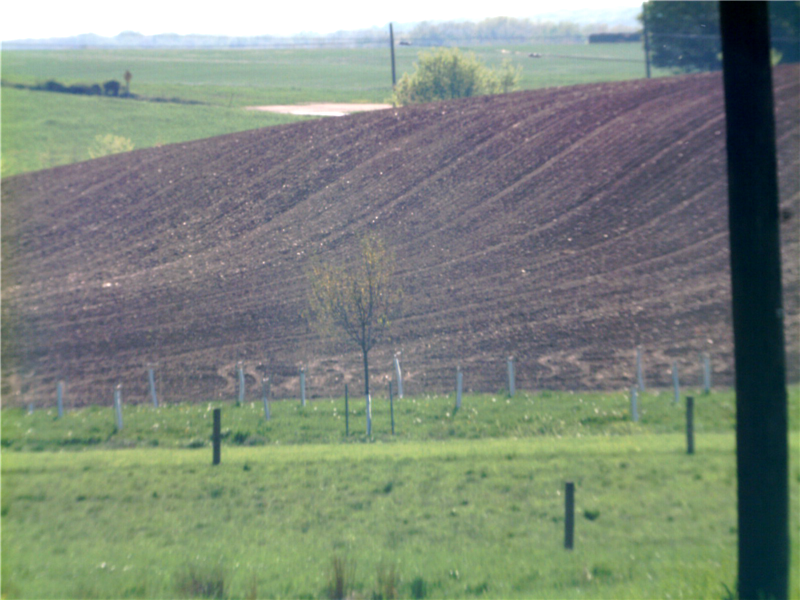
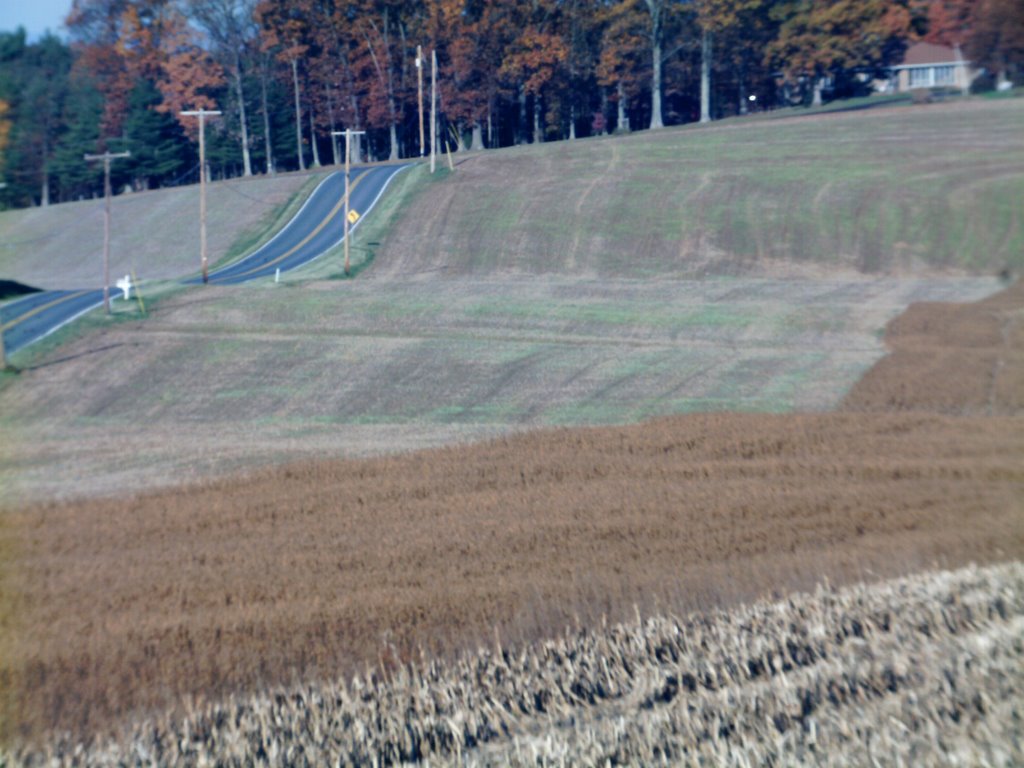
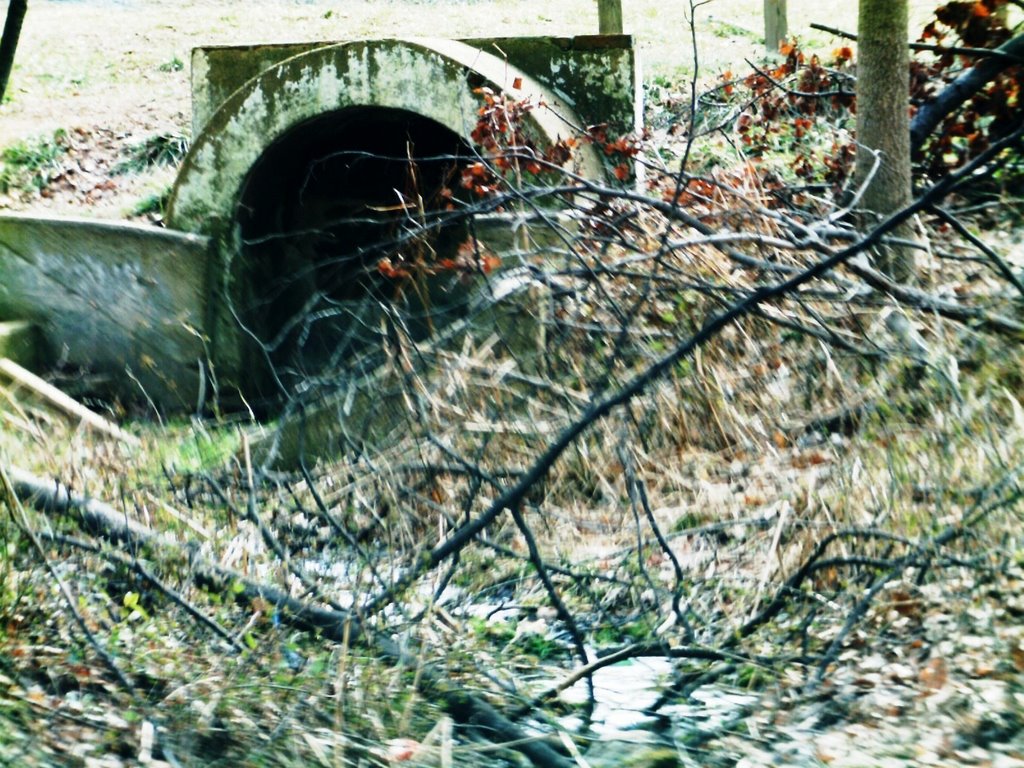
Near-death experiences, in my experience (and I've had a number of them), lead to a high level of awareness soon afterwards. You look at things differently. A 20-year old in his grandfather's Jaguar cut in front of me and almost killed me recently. Here are some Web links and photos of rural Carroll County, MD where I live. These scenes are there every day. I just went out and captured them today because I'm still alive. And here area a few recent poems. Being alive is good.


ccgovernment.carr.org/ccg/default.asp

Oak

There is a massive oak tree
I pass on my may to work.
Today, it was broken in half.
A proud oak
Brought down by forces of nature.
In my genes,
Is a code that can split me in two.
Unlike that great oak,
I can get up, replant myself
And grow again
With spirit, grit and grace.


Saving a Life

It’s true.
I dragged you from the fire
Half burned and unable to find the exit.
I guess you could say
I saved your life that day.
But it will never compare to the way that
Through food, warmth, hard work, laughter
And a woman’s love and life force
You have saved my life every day
Before and since that day.


Groove

I’m in a groove
Waiting for my oldest son Josh to show
To see Little Miss Sunshine
A movie with Steve Carell
A funny actor we both enjoy
When I think of my mom,
Dead three years now,
And how her face lit up
When any of her 8 children
Or 19 grandchildren would visit
And I know that, feel it,
The groove, that moment of happiness
Raised to a power of ten
Because here is my family,
Strong, shared, tender, good,
And even if people on the news
Are lobbing rockets and missiles
And bombing each others families,
My family here is safe,
And safe is oceans from sorrow.


Life School Dance

When I was young and naive
I splashed on too much cologne
And dressed to the nines
And headed to the school dance
To laugh with my friends
And to steal glances of lasses
With shy and bold smiles
Who flipped their long hair
And exposed their necks
And laughed some more until,
Tired of the teasing,
I asked them to dance
And the music took control
And everything was new
And mysterious and wondrous
Until, after more giggling and shy banter
If the girl was sweet or the timing was right
I would end up practicing at kissing
But mostly laughing because neither
Of us knew that this charged ritual
Eventually led to courting, marriage,
Children, mortgages, and bills,
Or the quarried heartache
Of a child lost in war.
Such a timeline is never revealed
In the first laugh or kiss.
Thank God.


Jesus Sign

“Honk if you know Jesus!”
I read the sign and respond
Honking my horn
And the fellow who holds it
Raises his hands and thanks me.
That takes courage.
Not for me
For him
Standing by the side
Of a busy highway.
Some may gesture with a digit
Some may throw things at him
Some may almost run him over.
But some honk
And that’s enough for him.
Clap your hands if you know Jesus!
If you are at a reading.
Clap your hands if you love Jesus!
If you are reading this.

8/12/2006

Web 2.0

Web 2.0 is happening...now. Here are some good insights as to why:

Debbie Weil
Gaping Void
PodTech
Yannick Lejeune


Knowledge at Wharton

If you ever wondered just who "The Man" is...the closest I ever got to The Man was going to school alongside Whartonites while attending The University of Pennsylvania. They think about money and wealth alot, as here.
They are unique. They help create this huge American economic miracle. Here is their intellectual jauggernaut: Knowledge at Wharton. If you are involved in any aspect of business, enjoy the articles, news, podcasts, analysis and data. They do a great job. Here is Wharton Publishing.

The Body Parts Market is a representative piece. This is particularly interesting to me because I was in Philadelphia for my niece's wedding recently and talked to my cousin who is a homicide detective there. He told me he just spent two years investigating a body parts ring that operated out of a back alley in North Philadelphia.
Bodies that were left to be creamataed were instead sent to this back alley where they were cut open for their very valuable body parts which were then stored in ice chests and sold to local doctors and hospitals. Who knew?

6/02/2006

Robert Scoble Podtech Rocketboom

Robert Scoble is an extraordinary man who is flipping the business world on its head.
(That guy with the wild head of curly hair is my 20-year old, Josh, doing his flips on the backyard trampoline. He's a mechanical engineer entering his last year at the University of Maryland. He's bright, humble, athletic, and gifted in math and science. He just taught himself mandolin and guitar, recently recording a CD at a studio outside Pittsburgh. He's going to make a great employee and an even greater husband for some fortunate girl.)
 Robert Scoble wrote Naked Conversations.
He has what the Irish call "The Magics," an extraordinary ability in some endeavor. In Robert's case, it is introducing others to the wonders of technology and blogging and the fact that trust between people is what takes technology from a dead bit to a better life.
I stumbled upon Robert's magic when I read his book Naked Conversations that he co-authored with Shel Israel.
Having studied and written poetry, fiction, and technical writing for many years, I can usually tell a good deal about someone from their writing.
What struck me most about this tome was the genuine spirit in which it was written, the ease with technology and the good that it could bring to humanity if done correctly, the evident humility and lack of pretentiousness in the writing, the insights that talking...not technology...drive the blogosphere, and the impressive marshaling of facts to support the premise that we are in for a revolutionary change due to blogs as great as when Jonathan Edwards preached the Great Awakening up and down the 13 colonies in the 1740's.
Now...some was Shel and some was Robert...but even the fact that they co-authored this work and collaborated proved their point...blogs are the modern incarnation of Hegel's famous thesis -antithesis, synthesis idea.
You talk...I react...you react to my reaction...we talk some more, hash it over and reach consensus...then we act.
This has driven mankind from the hunters to the warriors to the businessman to the product team in any corporation.

I visited Scobalizer where Robert really has the magic's is his ability to wear his heart on his sleeve. Recently, he lost his mother.
He blogged about it in a very honest way. He said how boring it was to watch his mother die. I lost my mother two years ago and I have to agree.
As Christ said, "Let the dead bury the dead."
For what it's worth, Robert, if you ever read it, here are a few poems I wrote after my mother passed away that I hope helps you deal with the grief.
Poetry lets the mind and soul scream in the silence...and laugh as well.
He is one I wrote for my dear departed mother.

Dreaming of Maytag

"Regan Maud Good was a Maytag Fellow
at the Writers' Workshop in Iowa."
Contributors BioThe Antioch Review
P. 126, Vol. 53 No.1 1995

"MAYTAG!!!"
my mother's dream
for whom Sears Kenmore
was all she and my father
could afford to clean
1950's and 60's whites,diapers,
and clothes of eight children's sweat,
blood, dirt and life.

"MAYTAG!!!"
she would repeat
like a Buddhist chant to no one
in particular as she loaded
another two dozen diapers
into the Sears Kenmore.

Maytag to me ever since
has represented everything good
and right about America:
an extremely durable, practical,
and useful product that serves
the family needs for decades
and all at a fair price.

"MAYTAG!!!"
I can still hear my mother say
looking at the Appalachian mountain
of soiled laundry
on the concrete floor before her:
six mountains of socks,
five mountains of underwear,
four mountains of shirts,
three mountains of pants,
two mountains of diapers,
one mountains of separates.

"MAYTAG!!!"
my mother would repeat
with each and every load.
Here, thirty-five years later
in the contributors notes
when trying to discern
the kinds of poetry and poets
the Antioch Review accepts,
I find Maytag offers a "Maytag Fellow."

Free money and two free years of writing time.
I look over at my Appalachian mountains:
six mountains of credit card statements,
five mountains of IRS bills,
four mountains of mortgage,
three mountains of car bills,
two mountains of utility bills,
one mountain of children's bills.

"MAYTAG!!!"
I chant like my mother now.
"MAYTAG!!! MAYTAG!!! MAYTAG!!!"

That Laugh

That laugh would start
like an ocean wave
"AAAAAAAAAAA
AAAAAAAAAAA "
and build in volume, depth, and pitch
until it became a tidal wave
"AAAAAAAAAA
AAAAAAAAAA
and washed over
my brothers and sisters and I,
to our delight as children and adults,
to our embarrassment when teenagers
out in public, over everyone
within a half mile round
and continue in undulating wave
after wave until you wondered
how she got oxygen fast enough
to supply those great waves
of laughter that seemed to plumb
the very depths of a joyful heart.

It wasn't all laughter, of course.
There were Harry's diseases…
but even during the worst days
the laughter continued
in great bursts and passion.
And among her many sayings:
"God doesn't close one door
that he doesn't open another!"
"The lint on your clothes
means your going to come into money!"
she expressed the desire:
"I pray to God every night for each
one of you and that I go first.
It must be the hardest thing on earth
to lose one of your children first."
Now your prayer has been answered.

If we are allowed to carry
one talent from earth into heaven
when my time comes, and if
God decides to take me in,
I expect I will hear that laugh rising,
as it did on earth, louder and higher
than all the others to say, as she had
so many times when she was alive
and knew that it was only half true,
"You did it all on your own, kid,
and I'm very, very proud of you!"

3/28/2006

Directory of Small Business Blogs

Read a brief and tightly-written review of two books, Blogwild! by Andy Wibbels and Naked Conversations by Shel Israel and ubberblogger Robert Scoble, by Richard Pachter of the Miami Herald, here. His headline reads, Can your business benefit from blogging? and his review and these two blog books will help you decide.

A directory of small businesses that have blogs can be found at the Small Business Blog Directory. Moveable type is worth looking into as well.

Another small business blog resource is pajama marketing. The link to the small Aldo Coffee Company in Mt. Lebanon, PA is worth reading and analyzing as it shows a small business blog that is well designed, easy to use, effective, current...and drives increased sales.

For productivity tips useful to small businesses, such as how to deal with email quickly, efficiently, and productively, you should visit 43 Folders.

For cheap advertising, find and use other business blogs that are in your market or a closely related market. Find out how at Blog News Channel by Nathan Weinberg, who says: I would suggest most bloggers give this a shot. The cost is minor, the exposure can be huge. Talk about using the long tail of advertising! I think that if we see more of these ads on blogs, and less ads for “valuable xml feeds”, AdSense will be more useful and entertaining for everyone.
This is the ad he has piggybacked onto Google ads: An Excellent Blog Nathan Weinberg knows what he’s talking about. Read his stupid blog [His words...not mine...in his ad] google.blognc.com

For more information, here is the Table of Contents of the Small Business Blog Directory:

Table of contents

1 Weblogs about Small Business Topics
1.1 Accounting-Finance, Small Business
1.2 Advertising, Small Business
1.3 Company Blogs (Blogs about a specific small business)
1.4 Content Management
1.5 Entrepreneurship & Business Ownership
1.6 Human Resources, Small Business
1.7 Intellectual Property Issues, Small Business
1.8 Legal Issues (blawgs), Small Business
1.9 Management, Small Business
1.10 Marketing, Small Business
1.11 Minority - Business Ownership
1.12 Motivation
1.13 News & Trends, Small Business
1.14 Online Marketing (including Search), Small Business
1.15 Organization (Getting Organized)
1.16 Public Policy & Regulations, Small Business
1.17 Public Relations, Small Business
1.18 Research, Small Business
1.19 Rural and Small Town, Small Business
1.20 Sales, Small Business
1.21 Selling to Small Business (The Small Business Marketplace)
1.22 Technology, Small Business
1.23 Weblogs About Small Business Blogging
1.24 Women - Business Ownership
1.25 Work-Life Balance

3 See also

3/24/2006

Poor Documentation Costs Big Money

Every day, poor documentation costs businesses, customers, and taxpayers millions of dollars.
Usually, evidence of the costly results (financial, injuries, wasted productivity, missed deadlines, frustration, opportunity costs, etc. ) of poor documentation do not make into the media's search light. 
It's so routine. 
And poor documentation is not sexy or sensational enough to attract the attention of a digital or paper journalist or celebrity.
This $6.7 million United States Air Force mistake was so costly it attracted a reporters attention (see below). 
It is worth reading for the lessons it offers, including the positive spin the USAF spokesman puts on this fiasco at the end of the piece. 
He's not alone in this, unfortunately, which is one reason poor documentation continues despite the widespread costs.

Whoops! There goes $6.7 million
At Hill AFB: A 5'' safety pin shoots down an F-22 engine
By Matthew D. LaPlante
The Salt Lake Tribune
A piece of metal - 5 inches long and of minimal cost - caused $6.7 million in damage to the engine of an F-22 fighter jet at Hill Air Force Base. Air Force officials say it was the most expensive mishap since the next-generation fighters began being deployed to operational squadrons last year.
The accident occurred Oct. 20, when the Air Force's first Raptor squadron, based in Langley, Va., was at Hill for an inaugural training deployment.
A 22-page investigative summary, released this week, concludes the engine was damaged when a mechanic failed to remove a safety pin from the plane's forward landing gear.
Just after the pilot, Maj. Evan Dertien, had started the Raptor's twin 35,000-pound-thrust engines, Senior Airman Arthur Blosser noticed the pin was still installed. Blosser signaled for Dertien to shut down the left engine so that he could approach and remove it.
As Blosser removed the pin, the streamer attached to it was caught in the jet intake of the Raptor's right engine, ripping the pin from his hand and sucking it into the engine.
Dertien, according to the report, "heard a crunch and a winding down sound" as witnesses outside the aircraft "saw sparks coming from the engine."
"For this particular accident, the dollar amount of the damage to the right engine is approximately $6,754,275," said Air Force spokesman Lt. Daniel Goldberg.
The cost of a landing gear pin, Goldberg said, "is minimal."

Investigators concluded that, while Air Force guides correctly instructed Raptor mechanics to install the landing gear pins before performing maintenance on the airplanes, there were no similar step-by-step instructions to ensure mechanics remember to take the pins out prior to clearing the aircraft for use.

Critics have said the Raptor program - at one time planned to cost $35 million per aircraft but at times since has approached $200 million per unit - is too expensive and largely irrelevant to modern war-fighting needs.
That, however, did not diminish the excitement at Hill in October when the Langley squadron arrived for two weeks of flying. On Oct. 18, the squadron's commander, Lt. Col. Jim Hecker, dropped the first bomb from a Raptor over the Utah Test and Training Range.
Hecker later called the time spent at Hill, where dozens of Raptors will be maintained at the Ogden Air Logistics Center, invaluable.

Good Documentation Saves Money and Increases Profits
Reuters News Service once carried a story* about the International Space Station crew getting a difficult start because the written procedures the crew carried into orbit were not entirely reliable. This is NASA’s careful way of saying the setup procedures were so poorly written that the crew could not do their job.

Space Station Crew Getting a Slow Start the article states:
CAPE CANAVERAL –– The crew of the International Space Station has a toilet, a food warmer and videoconferencing technology, but it is running short on oxygen… The problem is that a few things have fallen through the cracks, Jeff Hanley, lead flight director for the NASA portion of the mission, said Friday. Not literally, of course. Nothing falls in the weightlessness of space, but the written procedures the crew carried into orbit have not been entirely reliable. That led Shepherd to advise his bosses Friday at NASA Mission Control, "We worked really hard yesterday, and we could not keep up with the timeline. We're way behind today, too.
How many can identify with the astronaut’s frustration when trying to set up a critical hardware sub assembly or to use software only to find that the procedures…have not been entirely reliable?
Hopefully…not many… because if the technical writers produce first-rate electronic and paper documents that are in plain English: clear, concise and consistent.
By doing so, technical writers contribute to the profitability of products in these ways:
Electrical, mechanical, design, and software engineers can build the tool more quickly Manufacturing engineers and technicians are able to build tools faster
Installation engineers are able to install the tool faster (avoiding the astronauts problems) Training personnel are able to educates those who use the tool more quickly
Service engineers and maintenance technicians are able to keep the tool operating longer
Along with so many other factors, first-rate documentation assures that better tools are built and sold. In turn, this leads to satisfied customers, more tool sales and higher profits. 
Specifically, how do technical writers contribute to the bottom line?
Although most people know that technical writers produce manuals, technical bulletins, online help, and other paper and electronic documentation, others may not fully understand what else is involved in being a technical writer. 

What follows is an effort to explain briefly what technical writers are and what we do.
  • Transforms disorganized data into communication that transfers knowledge from the subject matter expert (SME) to the customer.
  • Converts the raw material of ideas into text that transfers knowledge.
  • Makes effective use of communication fundamentals to develop better documentation.
  • Understands the personal factors that affect communication.
  • Stays current about best practices, current tools, shifting technology and data that impact technical communication.
  • Knows and uses alternative methods when necessary to reach a variety of customers.
  • Writes documentation in plain English for domestic and overseas customers. Makes technical documentation easy-to-read and easy-to-use.
  • Remove irrelevant detail from the documentation to make it clear to the customer.
  • Makes suggestions that improve…does not demand changes without a good reason
  • Writes as a generalist or specialist as the need dictates
  • Learns highly technical concepts to better communicate them.
  • Keeps current as a technologist in a variety of applications, methodologies, and tools.
  • Exercise the skills, experience, and knowledge that add value to any software, hardware and Web projects, such as usability testing.
  • A technical writer can only accomplish first-rate documentation with the contributions and cooperation of all the various engineering and technical subject matter experts.
When you design the life cycle of your production schedule, include a few line items for the technical writer. 
He or she must transform your technical knowledge into plain English for internal and external customers. 
For all the experts who help with that job, I say thanks.

*Space Station Crew Getting a Slow Start, Reuters News Service, Sunday, November 5, 2000; Page A08

3/20/2006

Good Usability Blogs

When asked to explain a poem once, Robert Frost replied, "What would you have me do? Explain it in other and less good words?" Rather than use less good words to explain Marketing Sherpa, visit and read it yourself. Be sure to read his interview with Steve Krug. And there is much else here (metrics guides, marketing wisdom, market research and surveying, wireless advertising, and others).

Usability and Technology Evangelist Blog here.

Steve Krug is a usability expert and author of the usability classic Don't Make me Think: A Common Sense Approach on Web Usability. I encourage all who believe in usability to visit Steve Krugs blog. Read it in his good words.

Also read How We Really Use the Web, the 1997 classic by Jacob Nielsen How Users Read on the Web and Growing a Business Website: Fix the Basics First.

Together, they are an MBA in usability.

Enjoy.

For an example of good usability in how to make a product, see MAKE: Technology on Your Time.

3/09/2006

Teach Yourself to Blog

Blogging in a Snap by Julie C. Meloni is a Plain English handbook that teaches you the fundamentals, tips and tricks to create a blog.

Blogging in a Snap is a book for those who fall under the A-B-C list of bloggers, which is why we feature it here on Poetslife. These pages have the blogging tools that are useful for the rest of us.

The Forward contains this gem: Blogging is not about technology, It's about people. 

It helps if you learn some of the technology tools that enable you to create and maintain a blog so that you can interact with people you cold never know otherwise. This book is your toolkit.
Where Robert Scoble and Shel Israel's book naked conversations gives the why and how of business blogs, Julie C. Meloni's book offers procedures for the everyday blogger. 
It gives straight-forward descriptions of the navigation tools, screens, buttons, and fields of Blogger.

I have tried to use the "Help" section of Blogger many times to write this blog only to find that the "Help" descriptions are in need of help. 
This is speculation on my part, but I worked for a modem company once that was taken over by another modem company. 
They did not want to "waste" money going back and redoing and updating the help descriptions. 
To my eye, this is what happened at Blogger. 
Google bought it and then never bothered to update the "Help" section. 
For example, just try to do a spell check in Blogger...oy vey...

Blogging in a Snap fills in the gap by providing plain English, concise explanations of all the Blogger software's navigation tools, screens, buttons, and fields. Use this book and avoid the frustration I experienced...and still experience...trying to create Poetslife.

More specifically, it explains the details involved in a good blog, such as how to:
  • Register and configure a new blog
  • Create posts using the blogger editor
  • Create expandable blog posts
  • Insert images into your posts
  • Understand the blogger template structure and editor
  • Customize your template
  • Use a third-party template
  • Maximize comments
  • Implement haloscan commenting and trackback
  • Blog on the go with moblogs, and,
  • Use blog indexing
As the back cover states: Blogging in a Snap is for you if blogging is new to you and you just don't have time to sit down and figure out all the ins and outs on your own....and...you just want a book that quickly and efficiently shows you how to get your web log up and running.

It's short, clearly-written, well-illustrated lessons let you zero in on that one particular task you need to figure out right now--and then lets you get back to blogging. 

Learning how to set up and maintain a weblog shouldn't be tedious or time-consuming. Blogging in a Snap makes learning [how to blog] quick, easy, and even a little bit fun.

Having read many technical and programming books over the decades that are dense, poorly written, even more poorly organized, difficult to get through, and because no one bothered to edit them are five times as thick as they need to be, I can say that Julie Meloni's work is well written, well organized, and...most importantly, BRIEF!

She follows the old tech writer's 10% rule...she includes the 10% you need to understand to create and maintain a blog...which is useful to 90% of the new bloggers

Then, once you have mastered the basics (creating, naming, using, configuring your blog, etc.), she shows you how to create more advanced features (HTML, trackback, RSS, etc.).

The Contents are on the inside cover with a number. 
For example, under Chapter 4: Using Basic HTML and Working with Images, Creating Hyperlinks in Your Posts number 23 is listed. 
You can page through the numbered tabs to 23 and see several screens that show you how and where to hyperlink on a blogger screen.

Chapter Titles Include:

1. Start here.
2. Getting Started with Blogger
3. All About Posting
4. Using Basic HTML and Working with Images
5. Working with Bogger Templates
6. Commenting and Trackback
7. Additional Blogging Tools
8. RSS, Indices and Folksonomies

Other representative topics covered in Blogging in a Snap include:
  • Creating Your Blogger Account
  • Naming Your Blog
  • Using Blogger's Publishing Settings
  • Setting Up Blogger Archives
  • Enabling and Publishing Site Feeds
  • Configuring Blogger's Email Settings
  • Setting Up Groups and Members in Blogger
  • Modifying Your Blogger Profile
  • Creating a Post using the Blogger Editor in Manual Mode
  • Using Keyboard Shortcuts in the Blogger Editor
  • Using Paragraphs, Blockquotes and List Markup in Your Posts
  • Inserting Images in Your Post
  • Understanding the Blogger Template Structure and Editor
  • Using Blogger's Commenting System
  • Moderating Comments with Blogger
  • Using Blogrolls
  • Creating a Moblog
  • Creating an Audioblog
  • Using the Blogger NavBar
  • Using BlogThis! Add-Ons
  • Using Blogger for Word
  • Providing an External RSS Feed
  • Creating and Sharing Your Bookmarks
  • And much, much more
Blogs and The Poplar Spring
I'm a poet so I like metaphors. 
What goes in the Blogosphere through Blogs to me is similar to what went on for centuries around the fresh water springs at Poplar Spring, Maryland. 
For example, Poplar Springs is nearby my house. 
Here is what the sign says.

The Poplar Spring
In 1795 on a land-sale handbill, John Gillis, local tavern owner, referred to this location as The Poplar Spring. As the town grew in the center of this farming community it became known to locals and travelers as Poplar Springs.

The Indians passed this way centuries ago foraging for fish and game and created the trail. In the 1700’s, this trail became the Old Frederick Road used by travelers and Revolutionary War Soldiers.

In the 1800’s the wagons, stagecoaches and drovers came with their animals traveling east and west on the National Road and the Union and confederate Soldiers during the Civil War on their way to and from the local skirmishes and battled [such as Mt. Airy and Westminster, MD where Captain Charles Corbit and 90 Company C 1st Delaware cavalry made a suicide charge on 5,000 of J.E.B. Stuart’s cavalry delaying Stuart’s arrival at Gettysburg and helping to win that battle for the North].

We invite you to pause a moment and contemplate the value of this particular spring to man and animal as they lived here, worked, and traveled westward through this area.

The Howard County Department of Recreation and Parks
Adopt a Park
Boy Scout Troop 882
Cub Scout Pack 827
Poplar Springs, MD

So, when our Native American, Revolutionary War Era, Civil War Era, and other ancestors gathered around this spring, much of what went on then is what goes on now in Blogs. 

This spring provided water, shade, rest and the opportunity for hunter gathers, farmers, store owners, merchants, farm wives, children, and the community to gather, talk, exchange ideas, learn, and organize. 

Eventually, other uses for this spring were discovered, such as for gathering and storing large milk pails before they went to feed the city people in Baltimore. 
Blogs, used correctly, are modern day poplar springs gatherings.

Blogs may or may not create a business, but they connect people who can create the business. 

They make a good business better (see naked conversations). 
They allow people who need help to connect with people who offer help. Julie C. Meloni has done a yeoman's job of giving us the tools we need to create good blogs in Blogging in a Snap.

2/01/2006

Improve Your PowerPoint Presentation

If you want a good Microsoftr PowerPointr (PPT) tutorial, visit the Florida Gulf Coast University PowerPoint Tutorial. You will learn how to: Get Started, Screen Layout and Views, Work with Slides, Add Content, Work with Text, Color Schemes, Graphics, Slide Effects, Master Slides, Saving and Printing, Keyboard Shortcuts, Design Tips, and Presentation Basics. PowerPoint Tutorial is the K to 12 of PPT.

If you want to exploit even more of the the full potential for Microsoft's PowerPoint, visit PowerPoint Magic. You can learn Accessible PPT, Master Chef, Dynamic PPT, Fine Touches, Content KISS, Mouse Overs, Perfect Line Up, PPT to Video/DVD, Repository, How to "See," and 3D Transitions. PowerPoint Magic is the college course in PPT.

And if you want to go where few men and women have gone before in their PPT presentations, visit CrystalGraphics PowerPlugs for PowerPoint for their many plug-ins.

These plug-ins include: television-style 3D transition effects, video backgrounds, charts and graphs, JPEG business photos on CDs, professional "shells," 90 Flash animations, song soundtracks, super shapes (animated clipart), screensaves that inform, motivate and persuade [read advertise], famous quotations, headings and coordinated backgrounds. PowerPlugs for PowerPoint is the graduate course in PPT.

See also: 10 Best Internet Web Designs; Usability Software and Web Credibility


1/23/2006

Best Intranet Web Designs

All usability depends on two big questions: who are the users, and what are their tasks? Jacob Nielsen

Jacob Nielsen, "the world's leading expert on user-friendly design," has declared the 10 Best Internet Web Designs for 2007 and the 10 Best Intranet Web Designs 2006 for business and government websites, and you can bank on his picks more than any Hollywood or Wall Street award. He has a stellar record in this area.

1/22/2006

The O'Brien Chronicle

If I accomplished nothing else in this life, I take great pride in helping to preserve http://thenewwildgeese.com/profiles/blogs/the-o-brien-chronicle for future generations an important piece of Irish history, The O'Brien Chronicle

He was one of the Wild Geese, whose legacy continues through the Irish Brigade in the Civil War to the Fighting 69th today.

It is the story of Bernardo O'Brien who was dispossessed of his vast lands and castles in 1622, imprisoned in London, put on a ship to the New World, and spent decades warring in Brazil and eventually found his way back to Europe in hopes of getting back his land.

Friar Martin McDonnell who spent decades with indigenous people in the upper Amazon actually saved it by locating the ancient manuscript in San Paulo National Brazil Library, then translating from over seven languages and 15 dialects. 

I just spent 10 years trying to get it a wider audience.
 
The Wild Geese, and particularly Joe Gannon, although in utter disbelief about the tale because of how fantastic and strange it was, eventually put it on there website, thereby preserving it for future generations.

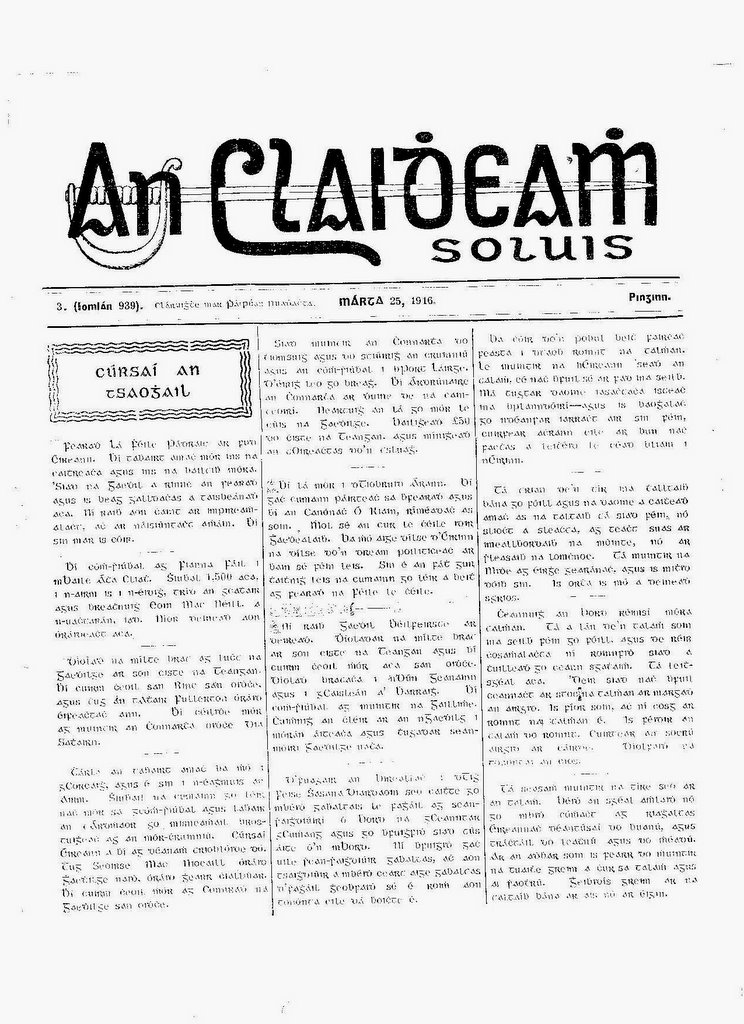
Martin also had a large number of the Irish Magazine An Claideam Soluis, which he saved from the dustbin of history in the 1950's when the Catholic University library was throwing them out and where he was getting a PhD in Irish Studies, he saved them and gave them to me to preserve (somehow).

After much research, I gave to the American Irish Historical Center in New York City and to a guy in Ireland who I knew was a self-taught Irish scholar and who would use them well. 

As all the leaders in the Easter Rebellion are well represented in its pages, and it is written in both Irish and English, it is a rich resource for anyone studying that period of Irish history.

Martin's stories in Brazil as a Franciscan with the indigenous people almost rival O'Brien's. 
Twelve years ago he suffered cardiac arrest and saw the white light. 
As he says, he was skipping confidently into heaven happier than he had even been and told St. Peter "I'm ready" only to be told by St. Peter, 
"No, we're not ready for you yet." Martin says he shook his fist at St. Peter and said, "You dirty rat!" and woke up in a hospital. 
He was given a few weeks to live...12 years ago. 
Anne has to be given great credit for his recovery and the quality of his life since that time.

 THE O'BRIEN CHRONICLE

Over the next several months, THE WILD GEESE TODAY will be presenting a most unusual and fascinating document: The story of an Irishman in colonial South America in the 1600s, written by the man himself, and hidden away in an archive in Brazil for several hundred years. It was translated from the original Old Spanish and Portugese by Martin McDonnell, of Gaithersburg, Maryland, and sent to us by fellow Marylander Bruce Curley. It is a story of one of the first of what we now call THE WILD GEESE, before the term was actually even in use. We are certain it will be of great interest to many of our readers.

Here is Bruce Curley's introduction, followed by the first installment of the O'Brien Chronicle itself, just as McDonnell translated it. Other installments of the story are to follow.


I first met Martin McDonnell in 1989 in Maryland at a silent retreat at St. Mary's. While everyone else walked around piously reciting rosaries or in silent prayer during breaks, Martin continued talking, loudly. His speech, squeaky and stilted, intrigued me. So I got talking to him late one night. I found out he had recently suffered a massive heart attack and lost a percentage use of motor functions, including speech, which accounted for the unusual sound of his voice.

As the boats passed across the five-mile wide Chesapeake Bay and we stood on a bluff, he unraveled a tale he called the O'Brien Chronicle, written by an Irishman to support his petition to the King of Spain, seeking to regain the land he lost in battle in the early 1600s. 

The chronicler, Bernardo O'Brien, eventually reached what is now Brazil. But, as you will read, there is far more to the saga. Martin had translated this nearly 400-year-old story, and 10 years ago was struggling to tell me that he had seen O'Brien's story, written in O'Brien's own hand, in his own words. I told Martin I would visit and look at his manuscript. I did, and O'Brien's story stunned me to silence.

For many people, Irish history is a country, a party, a flag, a poem, a series of battles against tyrants, a song, or even a religion. But as The O'Brien Chronicle demonstrates, Irish history is really the sum of ways in which Irish men and women have sought to preserve a collective memory against unbelievable odds. Bernardo O'Brien is an Irishman whose story transcends time and space.

Martin, then Friar Martin McDonnell and living in Bahia, Brazil, had noticed little blond-haired, blue-eyed children. Knowing how far and wide the Irish had been scattered, he went looking for evidence of Irishmen in early Brazil. Martin had been researching in the national library for a number of years when he met a nun from New York who told him about an extraordinary narrative in the library's archives. Martin then pulled and translated the document -- The O'Brien Chronicle -- which is written in a number of languages and dialects. Martin's years of work to make this story accessible continues the ancient tradition of Irishmen preserving the stories that are our history.

Many of the Irish have struggled to pass on their history, despite the best efforts of the Vikings and, later, the British to obstruct them. Without the many inventive ways that this story has been preserved by bright, courageous Irishmen and women -- from the ancient bards who memorized lines, to the hedge priests -- much of that history would be lost. Like those bygone heroes, Martin has struggled to give voice to a part of our past. I believe he has received God's blessing in this quest, ensuring that this piece of Irish history survives. We are immensely richer for it.

A special note of thanks must go to Martin's wife, Anne McDonnell, for refusing to allow the doctors to end life support after Martin suffered his stroke, going against the advice of her doctors. She is proof of the point made in the book "Cultural Selection" -- that the woman who shares a man's life is the most important force in determining whether his creative work lives through the centuries or quickly disappears.

Now we have begun a new millennium. And again, long-neglected Irish people who used a variety of ways to preserve their memory and accomplishments are coming to light. When asked to explain a poem, Robert Frost said: "What would you have me do? Explain it in other and less good words?!" Enough introduction! Here is the story of the O'Brien, "of the house of the Count of Thomond." God bless him. ... God bless all the brave Irish men and women and children who continue the struggle.

-- Bruce Curley


THE O'BRIEN CHRONICLE

BERNARDO O'BRIEN'S BRAZIL

The Brazil that Bernardo O'Brien visited during the early part of the 17th century was much less settled than the coastline of North America. Brazil was first discovered in 1499 by Spanish explorer Vicente Yáñez Pinzón (who could not claim it due to the Treaty of Tordesillas, 1494). It was claimed in 1500 by Portuguese explorer Pedro Alvares Cabral, who landed on the far eastern tip of Brazil. Cabral had had not been searching for land in that direction; he was actually intending to sail to sourthern Africa. 

The Portugese had found that the best way down the African coast was to sail far out toward the western Atlantic. Cabral had merely been blown further west than usual and thus struck the coast of Brazil. Though this was only eight years after Columbus, colonization did not develop as rapidly in the south as it did in the north. The early years of Brazil's history is that of Portuguese exploration more so than colonization. 

One of the first valuable commodities the Portuguese began to take home were red and purple dyes from Brazilian wood, which the Portuguese called pau-brasil, thus the origin of the country's name.

In early years of European involvement, Brazil was plagued by numerous groups or marauding bands called bandeiras, who made a living rounding up Indians for sale as slaves on the few European mines, plantations and farms. The most effective enemy of these slave traders were Catholic missionaries, especially those from The Society of Jesus, the Jesuits. 

Their Indian settlements, known as reducciones, were often the safest places for the native population. It was not until the 1530s that the Portuguese first began to colonize the coastline of Brazil. By then, other European nations, most notably the French, were attempting to exploit some of the riches of the Brazilian coast, as well, and the Portuguese needed to think of solidifying their claims on the rich natural resources of this emerging area. 

By midcentury the Portuguese had developed a system of political control, with the settlement of Salvador in the Bahia region as its capital. In 1580, the Portuguese and Spanish kingdoms were merged under Philip II of Spain. This union would last until 1640, which encompasses the period leading to and including the time when Bernardo O'Brien was in Brazil. 

These years were marked by increasing conflict between Philip's combined kingdom and other Europeans, with the English and Dutch, who were their traditional enemies on the continent, now presenting the most serious problems.

Though the English had a presence in Brazil, it was by far the Dutch who would be the biggest thorn in the side of Spanish/Portuguese Brazil. Through the 1620s and '30s, the Dutch would send many strong forces to Brazil and would seize large portions of the country at various points. The Dutch would finally be defeated in Brazil, but not until 1654. 

All of these countries will come into play on the pages of the The O'Brien Chronicle. O'Brien first comes to Brazil with an English expedition and later is in contact with the Dutch, Portuguese, Spanish, English, and other Irishmen; soldiers, explorers and colonists of these countries move through his narrative at various points. 

Like so many Irishmen forced to leave their country and use their wits to make a new life, O'Brien must keep those wits about him on many occasions, playing one side off against another in the shifting tides that sweep him off in one direction and another throughout his narrative.

This then is the Brazil of Bernardo O'Brien's world. A region that is ostensibly owned by the recently merged Spanish/Portuguese Empire, but one which is highly coveted by the English and Dutch, who will take it by force, if possible. It is a dangerous world, indeed, for this son of Erin, a world in transition, where friend and foe are never certain, but it is a world he seems highly adept at negotiating.

Part One - To The Amazon

Captain General Sir Bernard O'Brien del Carpio says that Sir Cornelius O'Brien, his father, being in Ireland a noble Gentleman of the house of the Count of Thomond, one of the oldest and most illustrious of that Kingdom, and lord of three estates on which he had three castles, was imprisoned by the English in the year 1622, and accused that in the wars of that Kingdom he had taken the side of the Catholics, and had engaged in service to the Crown of Spain, and they confiscated his inheritance and property.

At this time, the petitioner, being 17 years of age, was in England, in London, where there was also an English Gentleman named Sir Henry Roe, who had been a companion of Sir Francis Drake and of Sir Walter Raleigh, on their voyages. To whom several Counts, and titled persons of England, with a commission from King James gave a ship of 200 tons with artillery and outfittings to follow up the discoveries of Sir Francis and Sir Walter, and set foot upon and populate on the great river of the Amazon, of whom land news had been received, and was quite famous as being rich, and of great fertility, and had not yet been settled by white people. 

Sir Henry Roe set forth in this vessel in the year 1621 with 124 persons, and among them went the supplicant without telling his relatives or friends, so great was his desire to see (other) lands and new things.

They arrived at the bank of the Amazon river and, going some 10 leagues, arrived at the port, and site of the Indians named Sipinipua. They made friends with them, explaining at first by signs, until they came to understand the language, which is called Arrua. 

They went up the river about another 60 leagues in their ship to a site, which the natives previously called Patavi, and was later known here as Cocodivae. Here Sir Henry landed 16 persons, 12 Irish and 4 English, who were servants of the Irish, all Catholics, leaving the petitioner as Captain and ordering that they preserve the friendship of the Indians, and sustain themselves there until he sent aid from England or Ireland, and for this purpose he left with him a great quantity of rosaries, bracelets, knives, mirrors, spinning tops for boys, whistles, combs, hatchets, and various other things. This same Sir Henry setting out in his vessel did not send them aid in three years.

In the interim, the Petitioner soon learned the language of the Indians, although he had gained their friendship, nevertheless for his safety, as well as that of the other 15 Christians, he built a wooden fort, surrounded by a cavity of earth, and for defense kept 40 muskets, powder, munitions and other arms. Those Indians were obedient to many different masters, whom they called Bateros, and had among themselves continuous differences and wars. 

Their weapons are swords of wood, hatchets of stone, with wooden handles as thick as two elbows, bows, and arrows of cane with tips of stone, or bone, or very hard wood, wooden darts longer than the height of a man, rigged up at the tip like the arrows, and some with both poison and large wooden rings with four corners. 

The petitioner having gone to the aid several times of those on his site and county with musketry and government would win for them a victory, and thus earned their devotion and obligated them to himself, so they regarded him with tobacco and cotton, and gave him native food and drink.

Among the Irish were four good students, and Latins, who endeavored to bring the knowledge of God to the Indians, who had no religion but adored something called Numen, which was not even a deity. The Christians persuaded more than 2,000 of them that there was a God, a heaven with rest, and hell with torments after life.

As the end of the year that the petitioner had been there, with four more of the Irish, taking five muskets and supplies he went up the Amazon river about 700 leagues by water and land, taking always about 50 armed Indians as guides, aides, and interpreters from one people to another, and four canoes. 

They reached a land where they saw no men, but many women, which the Indians call Cuna Atenare, which means "strong women", and the Christians (call) "Amazons." These bind their right breasts flat like a mans', artificially, so they will not grow, to enable them to shoot arrows, and the left (breasts) large, like other women.

She sent him three of the most-prized women she had, and asked him to come speak with her.

They are armed like the Indians. Their queen, who is named Cuno Muchu, which means great woman or lady, was on one of the islands of the river. 

The petitioner sent her in his canoe an Indian woman as ambassador, and with her a mirror and a shirt from Holland as a present, and sample of the merchandise he was carrying, and if she liked it, she would speak with him and send a hostage 

She sent him three of the most-prized women she had, and asked him to come speak with her. He did, she asked him if it was he who had sent her the present, he said yes. She asked him what he wished, he said peace and permission to pass to her kingdoms and take care of of things there. 

She said she would grant his (petitions), and gave three slaves in exchange for the merchandise. He made her wear the shirt from Holland, with which she found herself putting on airs, and at the end of one week, when he had left, promising to return, she and her subjects indicated that they were sorry to see him go.

The Petitioner went up the river by land, where here were Indians so fierce that in no way were they pleased about it or disposed to speak to them. Then he returned down the same river, and then by another river which one flows from it, and flows through the land called

Harahuca, where there are crystalline stones and other resplendent things which the Indians regard highly as being a cure for melancholy and illness of the spleen. They went down this river to the sea of the North, where the river is called Serenem, from there by land they came to the mouth of the Amazon river, and from there they returned to their fort at Cocodivae.

About this time, there arrived on the Amazon river a ship from Holland, whose captain was named Abstan. They sent word asking the Petitioner if he would mind if they settled nearby, and if he would give them an interpreter to deal with the Indians, and they would live in friendship, and do things as he wished. 

He answered them that he had 4,000 Indians fighting out of devotion to him around there and he would have more if he were (attacked) and he intended (to) preserve the river with them alone, or even expand to more land, therefore the Dutch should leave. They went from there to the Coropa river near the conquest of Gran Para, where they began selling the population aid from Holland, and sending back tobacco and cotton.