The purpose of Poetslife is to promote the art and discipline of American Tactical Civil Defense for families and small businesses and to contribute practical American civil defense preparedness guidance for all Americans through my articles in the The American Civil Defense Association (TACDA.ORG) Journal of Civil Defense and leadership as the volunteer Vice President of TACDA.

Showing posts sorted by relevance for query technical writer. Sort by date Show all posts

1/06/2006

Technical Writer List Server

Technical writers are a group of professionals who face great demands from the corporate and government sector. They must often create order from chaos, clear words from dense words, and clean visuals from blurry originals.
Oftentimes, they must search through mountains of documents to find the nuggets that help others to understand an item, procedure, tool, concept, theory, graphic, Web contnet, software, hardware, diagram, table, DVD, brochure...whatever medium is asked by superiors...and they must do so under very, very tight deadlines...therefore...it can begin to feel like the rock is about to fall...any day now.
Technical writers understand each other...and the unique demands each faces each day. Thus..the importance of the technical writer list server, where technical writers can gather over the Web, trade war stories, exchange advice and point to where help is to be found. Technical writers are a group of professionals who help the world run...better...faster...easier. I tip my hat to them.
I encourage any tech writers who are wondering about any task they face each day...what software to use to capture photos best, how to convert a PDF back to Word...how to get programmers to share their design document...to visit the Google Groups technical writers list server (bit.listserv.techwr-l) for the "how to."
And I recommend that, if you choose to make your living doing technical writing, you reach out to the other technical writers out there, by joining the national Society for Technical Communication...and a local chapter like STC Washington, D.C. Baltimore and by joining the technical writers list server. I show a random post taken from the technical writers list server, below. It demonstrates the format where this wisdom can be viewed, mined, and used in practical ways to do a better job each day.

I don't know Goober Writer, but his words give the flavor of the individuals who make this profession such a fascinating and interesting craft


Reply to Author Forward Print Individual Message Show original Report Abuse

From: gooberwri...@yahoo.com (Goober Writer) - Find messages by this author
Date: Wed, 29 Oct 2003 08:00:06 -0800 (PST)
Local: Wed, Oct 29 2003 11:00 am
Subject: Re: Re: What is "technical" writing? (Was: RE: What to do?)
Reply to Author Forward Print Individual Message Show original Report Abuse
When an engineer learns to write about engineering topics, he or she does not study "engineering." He or she studies "writing." The skills that allow an engineer to write about technical subjects are writing skills.

Technical writing is *taught* in engineering programs (such as Northeastern University), but that doesn't mean that writing is an engineering discipline. In no way should the act of writing enter this equation. This is all about core communication skills.

The "engineering" aspect (IOW, "technical") is required for anything concerning a technical concept. The "writing" aspect (IOW, "communication") is required for anything being conveyed from one person to another.

So what is "technical writing?"

It's the clear communication of technical information and concepts to another person or party.
Whether an engineer learns to write or a writer learns in-depth technical concepts is moot. The fact is that someone needs BOTH to succeed in communicating information about technical "stuff" to ANYONE else (techie and Luddite alike).

You gain NO advantage from ignorance when approaching the task of communicating technical information. The argument of "being on par with your audience" is pure and utter crap. You need to know your stuff.

If you're writing about a UI that traps user input and saves it to a database for later queries, you really should know the ins and outs of how that entire system works. That way you can clearly communicate the facts to the audience at hand.

True, data entry people don't need to know about SSL, encryption, why some things get hashed and others don't, and so on. But, YOU knowing why is important so you can make an intelligent call as to what to communicate, to whom, how, when, and why.

A technical writer doesn't need to be the person who developed the tool being documented, but that writer should know all there is to know about that tool so they have the knowledge and expertise to know what info is important for whom, and how best to communicate it.

THAT is technical writing.
Goober Writer
(because life is too short to be inept)

"As soon as you hear the phrase "studies show",
immediately put a hand on your wallet and cover your groin."
-- Geoff Hart

12/14/2005

Bruce Curley Technical and Proposal Writer Resume

Bruce Curley

Senior Technical and Proposal Writer

We judge ourselves by what we feel capable of doing; Others judge us by what we have done. Henry Wadsworth Longfellow


Clearance: Public Trust


poetslife@protonmail.com                                                                                          301 325 7936

https://www.linkedin.com/in/brucecurley/                                          https://poetslife.substack.com/


Core Competencies

Cybersecurity Documentation Specialist Writing Cybersecurity and AI Documents

25 Years of Experience using Microsoft Word, PowerPoint,

and Excel

Senior Technical and Proposal Writer and Document Manager

Cyber, Proposal, Blog, Web Content, Instruction, Policies Writer

Collaborate with Subject Matter Experts, including Software, Hardware, Cybersecurity, and Artificial Intelligence Engineers

Author Quick Start Guides, Continuity of Operations and First Article Testing Documents

Expert-Level at Editing, Style, Formatting

Author White Papers

and Run Books

Deep Experience with Software Development Life Cycle

Write Plain English Software and Hardware User Manuals

Write Clear Manufacturing Instructions for Native Speaking

and Foreign Speaking Workers

Author Writing, Style, and Formatting Guidelines Books


Professional Summary - Senior technical and proposal writer with over two decades of experience crafting clear, high-impact technical documentation, proposals, and user-focused content for cybersecurity, software, hardware, and artificial intelligence applications. Adept at collaborating with hardware engineers to deliver user manuals, training guides, standard operating procedures and other written products that meet stringent deadlines and drive organizational success. Proven ability to simplify complex concepts for diverse audiences, including native and non-native English speakers, while maintaining quality. Create documentation in a fast, elegant, useful, high quality manner.

Senior Cybersecurity Technical and Proposal Writer, Red Cedar Solutions, 05/2023 — 02/2025, (Bernard, Hall, Manager, 301 580 0776, bhall@alankok.com) 

·         For the Bureau of Safety and Environmental Enforcement (BSEE), with cybersecurity and strategy experts, wrote BSEE Cybersecurity Strategy, BSEE Recommended Cyber Risk Mitigation Strategy and Practices for Gulf of America oil and gas platform safety.

·         Edited BSEE/BOEM (Bureau of Ocean Management) Preamble Plan of Action. 

·         With proposal team, created, wrote, and edited technical proposals and SOW’s for FRP’s.


Senior Technical and Cybersecurity Writer, Sealing Technologies Inc., 6750 Alexander Bell Drive, Suite 200, Columbia, MD 21046, 10/2021 — 01/2023

·         Partnered with cybersecurity, mechanical, and software engineers to produce user manuals, quick start guides, and AI/ML documentation for special forces cybersecurity fly-away kits.

·         Authored 12 milestone documents in 7 weeks, securing a $3M payment milestone.

·         Developed the company’s Style, Formatting, and Writing Guidelines book, standardizing documentation practices.

·         Conducted quality control for the Solar Winds Service Desk Solutions dashboard documentation, improving usability for internal and external stakeholders.


Senior and Cyber Technical Writer, Alpha Omega Integration, 8150 Leesburg Pike, Suite 1010 Vienna, VA 22182 (Contactor, IHS), 2/2021 — 10/2021

·         Wrote templates and content for Planview Capability Technology Management Knowledge Transfer for the Indian Health Service and metamodel data dictionary, glossaries, and other artificial intelligence client deliverables.


Senior Technical Writer, STULZ USA, 1572 Tilco Drive, Frederick, MD 21704, 5/2018 — 2/2021

·         Worked with engineering teams to write and edit installation, operation, and maintenance manuals for cooling, humidifiers for AI data center rack temperature solutions.

·         Co-authored sales policies and product support handbooks, distributing PDFs to marketing, sales, and engineering teams.

·         During a corporate merger, I updated 189 manuals to match STULZ USA format and style.

·         Improved document accessibility and consistency across departments.


Senior Technical Writer, Allegis Group, 301 Parkway Dr Hanover, MD, 21076-1159, 9/2016 — 5/2018

·         Created format and style templates and wrote content for security, procedure, policy, server build standards and other enterprise operations documents.

·         Wrote and updated the disaster recovery plan, disaster recovery run book, standards, policies, data sheets and other work products to meet current and future needs.

·         Migrated and rewrote legacy documents to current standards, style, formatting and organization rules and regulations and uploaded them to the SharePoint website.


Senior Technical and Cybersecurity Writer, Transamerica, 1201 Wills St, Baltimore, MD 21231, 4/2016 — 9/2016

·         With contributions from Manager, Risk Systems, Global Hedging Services and SMEs, re-wrote  multiple store-of-knowledge artifacts into Plain English.

·         Created 38 forms and templates to meet corporate, regulatory, and financial standards.

·         Reviewed over 40 corporate continuity of operations and disaster recovery plans to write integrate them into one model business continuity and disaster recovery plan.

·         Rewrote Service Level Agreements (SLA's) in Plain English for bank customers.


Education

University of Pennsylvania, BA, Cum Laude 3.56 GPA; Johns Hopkins, School of Advanced International Studies, graduate courses in Canadian Studies and economics, American University in Paris semester abroad, Society for Technical Communication seminars for 18 years.

Professional Affiliations

Volunteer Vice President, The American Civil Defense Association (TACDA.ORG), https://tacda.org/about/#board). Provide family-friendly manmade and natural disaster education, vision, and direction for over 7,000 members. I have written 18 civil defense articles over 16 years of leadership. Write policy articles for TACDA’s Journal of Civil Defense, such as: Cybersecurity is Everyone’s Business: Protect Your Family, Vol. 60, Issue 1, 2025; Farmers Markets: Solution to American Food Shortages, Vol. 58, Issue 1, 2023; Children and Civil Defense, Vol 52, Issue 1, 2018.

Write and publish the American Tactical Civil Defense Substack to help American families prepare for and recover from disasters: https://poetslife.substack.com


Professional Affiliations/Other Work

Featured in the article, “Bruce V. Curley: Poet” in Intercom, Society for Technical Communication magazine, November 2002, p. 44.
Editor, Opening NATO’s Door, How the Alliance Remade Itself for a New Era, Ronald D. Asmus, Council on Foreign Relations, Columbia University Press, NY, 2002
The American Civil Defense Association (TACDA), “Web 2.0 Tools for First Responders,” Spring Issue, 2009
Vice President, The American Civil Defense Association
Wrote the following articles:
Children and Civil Defense, JCD, Vol. 51, Issue 1, 2018, p. 18
When State Hackers Take Aim at the Power Grid, JCD, Vol. 50, Issue 2, 2017, p. 12
Rolling Up the ISIS Tactical Use of Social Media, JCD, Vol. 49, Issue 1, 2016, p. 17
How to Write a Business Continuity & Disaster Recovery Plan, Vol. 49, Issue 2, 2016p. 32
ISIS Use of Social Media as a Force Multiplier, JCD, Vol. 48, Issue 2, 2015, p. 27
CBRNe: Low Probability, High Impact, JCD, Vol. 49, Issue 2, 2015, p. 30
Surviving a House Fire: Lessons Learned, JCD, Vol. 47, Issue 1, 2014, p. 27
Civil Defense Redux, JCD, Vol. 45, Issue 1, 2012, p. 13
The Importance of Private Sector and Local Government MOUs, p. 29; Creating a Church Emergency Plan, p. 38; Vol. 46, Issue 1, 2013
Active Shooter, Bomb Threat, or Just Rumors, Vol 47, Issue 1, 2014, p.3
Web 2.0 Tools for First Responders, Spring Issue, Vol 41, Fall/Winter Issue, 2009, p. 24
Creator of civil defense-themed Poetslife Blog (poetslife.blogspot.com). Sample posts follow.
EF-1 Tornado Lessons from Mt. Airy MD (https://poetslife.blogspot.com/2018/11/ef-1-tornado-lessons-from-mt-airy-md.html)
Church Emergency Evacuation, Shelter-in-Place, and Lock-Down Plan (https://poetslife.blogspot.com/2017/05/church-emergency-evacuation-shelter-in.html)
Emergency Exercise – EPLEX (https://poetslife.blogspot.com/search/label/Emergency%20Exercise%20-%20EPLEX)
Hawaii Ballistic Missile Alert Fail and Fix (https://poetslife.blogspot.com/2018/01/hawaii-eoc-mega-fail-and-simple-fix.html)
Emergency Management – National Disaster Medical System (https://poetslife.blogspot.com/2012/05/emergency-management-medical.html)

Children and Civil Defense (https://poetslife.blogspot.com/2018/10/why-civil-defense-matters-for-children.html)


Have written over 12 speeches for the Mayor of Mt Airy, MD.
As a volunteer, set up the policies, procedure, plans, continuity of operations, and equipment for an emergency operations center (EOC) and wrote continuity of operations plans for the Town of Mt. Airy. Helped write the memorandum of understanding to obtain supplies from local merchants in an emergency.
Member of the Community Emergency Response Team (CERT). See: 

http://poetslife.blogspot.com/search/label/Tornado%20Emergency%20Exercise; http://poetslife.blogspot.com/search/label; Volunteer%20Mobilization%20Center;


In the dozens of proposals, manuals, hundreds of procedures, specifications sheets, on-line content, CDs and DVD I have worked on, I have taken and still dense, confusing, and disorganized text, pictures, diagrams and tables and convert them into a clear, concise, and consistent package in digital and paper form.  As a quick study, I master highly technical material with minimal supervision.

In software documentation, I have created works for the full document cycle, from design to project to user manual. Most manuals I have written include hundreds of graphics, which I have strategically placed to guide the reader's learning. 

On numerous software and hardware teams, I have always added value to the product throughout the product life cycle. Here is one example. At Northrop Grumman, I helped write the Biohazard Detection System (BDS) Operation and Maintenance Handbook (Introduction, Safety, Theory of Operation, Hardware, Software, Operation and Maintenance, Troubleshooting chapters). 
It was a complex with an X, Y, Z robot, a genetic tester, and fluidics. I took hundreds of photos of components and integrated those photos with the text. For accuracy and project requirements, I undertook detailed validation testing of the unit, software, and network against the written procedures and checklists.

The manual and the CD are used to train dozens of technicians who maintain and operate the system, and engineers who use it as a store of knowledge. At one employer, I created a detailed diagram to central text equipment that led to a 20 percent decrease in calls to the help desk. 


12/17/2005

Discipline of Writing Resources

Photo Sources: NASA
"I have learned to use the word impossible with the greatest caution." Wernher Von Braun

Like walking on the moon, good writing requires discipline. Here are a few places to go to learn that discipline.

Society for Technical Communication (STC)
STC Washington
One way to learn the skills necessary to communicate effectively is through constant reading and study. A disciplined approach includes joining a professional society. I recommend the Society for Technical Communication. Also, take classes from your local Society for Technical Communication, such as the Washington, DC and Baltimore, MD Chapter.

Why? It is the only way to stay disciplined and current in the field. For example, my local STC chapter, Chapter 2 for the Washington, D.C. area, has seminars, newsletters, meetings, communications tools, jobs, Web resources, search tools, competitions, and special interest groups (SIGs), and other ways and means to make you and keep you an first-rate technical communicator.

50 Writing Tools
For a quick primer on How To Write, see Poynteronline.

Try Mike Markel's Technical Communication manual...it lists for above $80 but you can get one on e-bay used for $20. http://www.amazon.com/gp/product/0312403380/104-6699886-0596706?v=gla...

He also has a website that is useful: http://bcs.bedfordstmartins.com/techcomm/default.asp

Your Local Community College Example
Austin Community College Example
Your nearby community college has first-rate, inexpensive courses on technical writing. It is a good place to get started with the nuts and bolts of how good technical writing is accomplished.

A Certificate from a Graduate School
University of Alabama Huntsville
Huntsville, AL has one of the highest concentrations of high-tech manufacturing in the nation. Redstone is there. So is Space Camp, the U.S. Space & Rocket Center, where I took my college student in mechanical engineering when he was six-years old (hmmm...maybe he got the idea to be an ME from the Wernher Von Braun exhibit there) and Redstone. There may be many places to get a graduate school technical writing certificate, but few would seem to be in the shadow of Wernher Von Braun.

A College or University Example
UMBC
If you have the money and the years, there are numerous college and university technical writing programs where you can get an undergraduate or graduate degree.

A Local Writer's Center The Writer's Center Example
Many areas have writer's centers where you can go to hone your craft. Although they do not have the rigor or depth of a college or university writing program, they are excellent places to meet other writers, take courses around your work schedule, and where you can choose from a variety of writing disciplines, from scriptwriting to corporate writing to one-on-one manuscript mentoring. Most of the classes are taught in a workshop format and are a good way to begin to learn the discipline and skills required for good writing.

The Writer's Center in the Washington, D.C. area is one such center. I have taken workshops at The Writer's Center (e.g. HTML and the Web in 200) and can vouch for their quality. As they say on their homepage: Whether you are a seasoned author or are just beginning to write seriously, the workshop experience can nurture your artistic life as few other activities can.

Technical Writing Bookstore's
Reiter's Technical Bookstore Example
Like becoming an astronaut, technical writing is a discipline that requires much self-learning to be able to master the body of knowledge required to be a first-rate technical communcator. It also requires the kind of devotion to the mission astronaut Neil A Armstrong showed when he was so busy carrying out his tasks when he landed on the moon that he did not get around to taking photos of himself there.

But to keep current with the current and past technical communication body of knowledge, read constantly.

3/24/2006

Poor Documentation Costs Big Money

Every day, poor documentation costs businesses, customers, and taxpayers millions of dollars.
Usually, evidence of the costly results (financial, injuries, wasted productivity, missed deadlines, frustration, opportunity costs, etc. ) of poor documentation do not make into the media's search light. 
It's so routine. 
And poor documentation is not sexy or sensational enough to attract the attention of a digital or paper journalist or celebrity.
This $6.7 million United States Air Force mistake was so costly it attracted a reporters attention (see below). 
It is worth reading for the lessons it offers, including the positive spin the USAF spokesman puts on this fiasco at the end of the piece. 
He's not alone in this, unfortunately, which is one reason poor documentation continues despite the widespread costs.

Whoops! There goes $6.7 million
At Hill AFB: A 5'' safety pin shoots down an F-22 engine
By Matthew D. LaPlante
The Salt Lake Tribune
A piece of metal - 5 inches long and of minimal cost - caused $6.7 million in damage to the engine of an F-22 fighter jet at Hill Air Force Base. Air Force officials say it was the most expensive mishap since the next-generation fighters began being deployed to operational squadrons last year.
The accident occurred Oct. 20, when the Air Force's first Raptor squadron, based in Langley, Va., was at Hill for an inaugural training deployment.
A 22-page investigative summary, released this week, concludes the engine was damaged when a mechanic failed to remove a safety pin from the plane's forward landing gear.
Just after the pilot, Maj. Evan Dertien, had started the Raptor's twin 35,000-pound-thrust engines, Senior Airman Arthur Blosser noticed the pin was still installed. Blosser signaled for Dertien to shut down the left engine so that he could approach and remove it.
As Blosser removed the pin, the streamer attached to it was caught in the jet intake of the Raptor's right engine, ripping the pin from his hand and sucking it into the engine.
Dertien, according to the report, "heard a crunch and a winding down sound" as witnesses outside the aircraft "saw sparks coming from the engine."
"For this particular accident, the dollar amount of the damage to the right engine is approximately $6,754,275," said Air Force spokesman Lt. Daniel Goldberg.
The cost of a landing gear pin, Goldberg said, "is minimal."

Investigators concluded that, while Air Force guides correctly instructed Raptor mechanics to install the landing gear pins before performing maintenance on the airplanes, there were no similar step-by-step instructions to ensure mechanics remember to take the pins out prior to clearing the aircraft for use.

Critics have said the Raptor program - at one time planned to cost $35 million per aircraft but at times since has approached $200 million per unit - is too expensive and largely irrelevant to modern war-fighting needs.
That, however, did not diminish the excitement at Hill in October when the Langley squadron arrived for two weeks of flying. On Oct. 18, the squadron's commander, Lt. Col. Jim Hecker, dropped the first bomb from a Raptor over the Utah Test and Training Range.
Hecker later called the time spent at Hill, where dozens of Raptors will be maintained at the Ogden Air Logistics Center, invaluable.

Good Documentation Saves Money and Increases Profits
Reuters News Service once carried a story* about the International Space Station crew getting a difficult start because the written procedures the crew carried into orbit were not entirely reliable. This is NASA’s careful way of saying the setup procedures were so poorly written that the crew could not do their job.

Space Station Crew Getting a Slow Start the article states:
CAPE CANAVERAL –– The crew of the International Space Station has a toilet, a food warmer and videoconferencing technology, but it is running short on oxygen… The problem is that a few things have fallen through the cracks, Jeff Hanley, lead flight director for the NASA portion of the mission, said Friday. Not literally, of course. Nothing falls in the weightlessness of space, but the written procedures the crew carried into orbit have not been entirely reliable. That led Shepherd to advise his bosses Friday at NASA Mission Control, "We worked really hard yesterday, and we could not keep up with the timeline. We're way behind today, too.
How many can identify with the astronaut’s frustration when trying to set up a critical hardware sub assembly or to use software only to find that the procedures…have not been entirely reliable?
Hopefully…not many… because if the technical writers produce first-rate electronic and paper documents that are in plain English: clear, concise and consistent.
By doing so, technical writers contribute to the profitability of products in these ways:
Electrical, mechanical, design, and software engineers can build the tool more quickly Manufacturing engineers and technicians are able to build tools faster
Installation engineers are able to install the tool faster (avoiding the astronauts problems) Training personnel are able to educates those who use the tool more quickly
Service engineers and maintenance technicians are able to keep the tool operating longer
Along with so many other factors, first-rate documentation assures that better tools are built and sold. In turn, this leads to satisfied customers, more tool sales and higher profits. 
Specifically, how do technical writers contribute to the bottom line?
Although most people know that technical writers produce manuals, technical bulletins, online help, and other paper and electronic documentation, others may not fully understand what else is involved in being a technical writer. 

What follows is an effort to explain briefly what technical writers are and what we do.
  • Transforms disorganized data into communication that transfers knowledge from the subject matter expert (SME) to the customer.
  • Converts the raw material of ideas into text that transfers knowledge.
  • Makes effective use of communication fundamentals to develop better documentation.
  • Understands the personal factors that affect communication.
  • Stays current about best practices, current tools, shifting technology and data that impact technical communication.
  • Knows and uses alternative methods when necessary to reach a variety of customers.
  • Writes documentation in plain English for domestic and overseas customers. Makes technical documentation easy-to-read and easy-to-use.
  • Remove irrelevant detail from the documentation to make it clear to the customer.
  • Makes suggestions that improve…does not demand changes without a good reason
  • Writes as a generalist or specialist as the need dictates
  • Learns highly technical concepts to better communicate them.
  • Keeps current as a technologist in a variety of applications, methodologies, and tools.
  • Exercise the skills, experience, and knowledge that add value to any software, hardware and Web projects, such as usability testing.
  • A technical writer can only accomplish first-rate documentation with the contributions and cooperation of all the various engineering and technical subject matter experts.
When you design the life cycle of your production schedule, include a few line items for the technical writer. 
He or she must transform your technical knowledge into plain English for internal and external customers. 
For all the experts who help with that job, I say thanks.

*Space Station Crew Getting a Slow Start, Reuters News Service, Sunday, November 5, 2000; Page A08

12/19/2005

Quality Software, Process, and CMMI

Go to the penultimate website for creating good and useful software through a disciplined process that documents everything (a senior technical writer's idea of heaven), and for how to relaunch software that has failed.

Creating useful software can save a company large amounts of money in reduced production time and significantly reduced errors. 

The Software Engineering Institute at Carnegie Mellon teaches the Capability Maturity Model Intebration (CMMItm) to thousands of companies every day which proves that good management, planning, and a continual improvement process lead to changes in key process areas along the software development cycle. Their CMM tools are to the modern software cathedrals what a plumb and level were to medieval cathedrals.

CMMI Overview PowerPointtm Presentation
http://www.sei.cmu.edu/cmmi/general/general.html
What is CMMI
http://www.sei.cmu.edu/cmmi/general/general.html
CMMI Performance Results
http://www.sei.cmu.edu/cmmi/results.html

As to why you might want to use CMMI as your process system to improve your product and profits, the table below, courtesy of the Carnegie Mellon Software Engineering Institute CMMI Performance Results website page, is worth a look.

Results (reported as of December 15, 2005)

You can view examples of CMMI performance results by organization or by performance category. The following table contains a summary of the performance results:
Performance Category
Median
Number of Data Points

Low
High
Cost
20%
21

3%
87%
Schedule
37%
19

2%
90%
Productivity
62%
17

9%
255%
Quality
50%
20

7%
132%
Customer Satisfaction
14%
6

-4%
55%
Return on Investment
4.7 : 1
16

2 : 1
27.7 : 1
This table summarizes quantitative information from 25 organizations that have reported results that can be expressed as performance changes over time.

2/08/2022

Robert Scoble Blog How To

Naked Conversations: The Book

NOTE: I wrote this blog post about how to write blogs in 2006. Now it is 2023. As this post still gets many hits each day, I moved it to the top of Poetslife. Enjoy, all you new bloggers. As blogs have stood the test of time, it is good to review the  fundamentals of creating one.

What is a blog? 
What do they do? 
Who has one and how do they use it? 
Why do they matter? 
How will they change the world? Business? America? Europe? Asia? Africa? Latin America? 
Should you have a blog?

Find the answers to these and other questions in naked conversations: how blogs are changing the way businesses talk with customers...and everyone else for that matter.
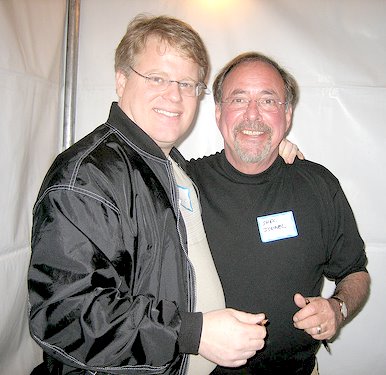
Robert Scoble (left) and Shel Israel (right) have given us a gift: naked conversations: how blogs are changing the way businesses talk with customers. Kudos to both for trying to describe, analyze, and provide a handbook about blogs and the blogosphere.

Successful Blog Traits...Scoble and Israel give five tips for blogs that succeed:
  • Talk...don't sell
  • Post often...and be interesting
  • Write about issues you know...and care about
  • Blogging saves money...but costs time
  • You get smarter by listening to what people tell you
Since the book was published in 2006, corporate blogs have multiplied. Oracle's blog shows a corporate example and JoHo blog demonstrates a brilliant tech blog.

The Blogs
For a list of the blogs noted in naked conversations, see: NC blogs, which is the blog where they wrote the book before they wrote the book. The collective wisdom of the blogosphere made this a much better book...which illustrates a central tenet of their book. And the circle...

Techcrunch Tracking Web 2.0 by Michael Arrington gave a naked conversations (NC) book-signing party for 400 on February 17, 2006. Here are some blogs that discuss the event:
Robert ScobleDave Winer, Scott Beale, Dave McClure, Tracy Sheridan, Alex Moskalyuk, Robert Anderson, Dan Farber Pictures, Nik Cubrilovic, Jeremiah Owyang, Mark Jen, Rafe Needleman, Renee Blodgett, Chris Mullins, Mike Davidson, Brian Oberkirch, Joseph A. di Paolantonio, Jeff Clavier #2, James Gross, Alexander Muse, Oliver Starr, Rick Segal, Podtech, Max Kiesler, Dion Hinchcliffe, Narendra Rocherolle, George Nimeh, Om Malik, Dan Farber , Susan Mernit, The Conversation
The Post Money Value, Like it Matters, Jeff Clavier's Software Only, tech crunch, gapingvoid, ZDnet, pod-serve, nik, TechCrunch5, Crunchnotes, Diva Marketing Blog, weblogs work, stoweboyd, down the avenue, TwistImage, James (Australia), No Soap, Radio!, Monkey Notions, Conscious Connections, Werblog, Digestivo Cultural (Brazil), ValleyWag - (very funny photo captions), Rocketboom (the show), Rocketboom (TechCrunch5 NC party video), Grigo's Blog (China), Teachers Lounge, Church of the Customer, Bernd, Hebig, Shel, and on and on and....

Washington Post NC Book Blog Interview 2/24/2006

Robert Scoble's list of blogs to visit each day includes: engadetgapingvoid, instapundit, buzzmachine, and daringfireball

Shel Israel's list of blogs to visit each day includes: whatsnextblogmcgeesmusingsnewmediamusings, hyperorg, englishcut

That the book received the imprimatur of John Wiley & Sons, the working technical writer's continual education graduate school, makes it credible for me. 
Blogging has certainly come a long way from the early years
With over 27 million out there, here are the New York Magazine blessed top 50

Although you may not go from blogs to riches, Scoble and Israel give you a strategy for how to create a blog that may not make the top 50, but will have value for you, your business, and others...nonetheless.

Chock-Full-A-Blogs
Naked Conversations is chock-full-a-blogsyou can use. 
Such blog addresses are conveniently found as footers at the bottom of many pages. You might want to read the book seated at your computer so you can check out the myriad of blogs they thought good enough to include from the millions that are now out there. 

Here are a few they mention by chapter.

In Chapter 4: Direct Access:  
http://www.ernietheattorney.net/, http://betweenlawyers.corante.com/, http://www.lessig.org/blog/, http://nip.blogs.com/, http://www.okpatents.com/phosita/, http://www.promotetheprogress.com/, www.rethinkip.com, sethgodin.typepad.com, customerevangelists.typepad.com/blog, designsponge.blogspot.com, http://www.alyson.ca/, http://www.whatsnextblog.com/, http://www.bloombergmarketing.blogs.com/, http://www.allmarketersareliars.com/

On page 172 under Tip #2: Read a bunch of blogs before you start, they list: www.pubsub.com, www.bloglines.com/citations, www.feedster.com, www.icerocket.com, www.technorati.com; and under Tip #3: Keep it simple. Keet it focused, they list blogsearch.google.com and www.larkware.com/index.html. Also, they talked to hundreds of bloggers to write the book and in Acknowledgements the list even more, such as: radio.weblogs.com/0108035, whatsnextonline.com, www.collaborativemarketing.com, and www.bizdrivenlife.net.
Blogs are even listed with the book inside cover blurbs:
chris.pirillo.com, www.micropersuasion.com, www.whatsnextblog.com, www.gapingvoid.com, blog.softtechvc.com, www.guidewiregroup.com, nevon.typepad.com/nevon, randyh.wordpress.com/, technosight.com/blog, and www.cameronreilly.com

[See Crisis Blogging: risks, rewards and the rapidly changing world of best practices at Global PR Blog Week 2.0 for a first-rate analysis of how blogs now affect how a business or government successfully deals with or botches (read Katrina) any given crisis.]

N.B. busy executives...to my eye, this book includes an even rarer gift...a Subject Index created by a human, not a word search, so what you are looking for is clearly listed and easy to find. For example, under blogging it lists: advantages 44-45, culture 150-152, employment dangers 188-190, findable 28, Google and 28-29, linkable 28, publishable 28, six pillars 28, social 28, syndicatable 28, trends 112, viral 28.

What Are Blogs 
Naked Conversations explores why blogs exist, namely, to help people, many of whom own or work for a business, to talk, to learn from each other, and to connect for mutual advantage. Like the ancient white oak, we are all connected. Some are in the roots, others in the branches, and others in the leaves. 
I am a poet and I like metaphors. 
For me, the blog is the trunk that allows those who are leaves to connect to those in the roots and branches who would never have known of each other in the past...and to grow together by that knowing.
In the Philadelphia neighborhood
 where I grew up, there was one mother who connected everyone and who knew how to connect you with anyone. 
The guy who owned the corner grocery or hardware store 
or the postmaster at the post office performed a similar role. They were the people who took the time and learned the skills to keep everyone connected. That world is gone, but blogs can do the same on a scale unimaginable just a few years ago. And for business, your blog (or lack of one) can determine if you succeed or fail. 
naked conversations willgive you the blog tools to connect your product or service to people who will then connect you to more people than you can ever reach through traditn't like the tree metaphor you have to concede the point: blogs allow a kind of communication 
ional marketing, sales, advertising.
Even if you dothat is fun, gile, intellectually stimulating, and rewarding...if done correctly and successfully.
For a company, you can add tha
at blogs can add to your profits if they are done honestly and capably. As well, they can result in a severe loss of profits if they are done dishonestly, incompetently, or poorly. 
The choice is yours. For how to build, maintain and promote a business blog successfully, read naked conversations by Robert Scoble and Shel Israel.
This is one of those rare manuals...a clear, concise, consistent and lucid manual....a "how to create a useful blog" manual that is beautifully written, easy to understand, intelligent, and well organized...the handbook that will give home office and corporate office workers the tools to create, communicate and illucidate.naked conversations contains a cornacopia of suggestions for how to do it right and many examples of how to do it wrong. 
They skip the "Theory of Operation" by referring you to the Cluetrain Manefesto and customers, it's sellers and buyers, to the people inside and outside...quickly deliver the meat and potatoes of how a business can talk with its employees efficiently, through a blog
What a newspaper, telephone, TV and the old media did in centuries past, the blog is doing now...but with many more digital hyperspace features in nanotime and with you doing the talking rather than being talked at.

Chapters
Chapters and subjects covered in
naked conversations include:
Forward by
Tom Peters
Introduction: Of Bloggers and Blacksmiths
What's Happening
Souls of the Borg
Everything Never Changes
Word of Mouth on Steroids
Direct Access
Little Companies, Long Reach
Consultants Who Get It
Survival of the Publicists
Blogs and National Cultures
Thorns in the Roses

Blogging Wrong & Right
Doing It Wrong
Doing It Right

How to Not Get Dooced
Blogging in a Crisis

The Big Picture
Emerging Technology
The Conversational Era
Acknowledgements [very useful...many cutting edge blogs listed...innovative]
Name Index [crisp and lean]
Subject Index [brief and clean]

The Authors
Shel Isreal has developed launch strategies for Sound Blaster PowerPoint, FileMaker, dBase, Paradox, Mapinfo and counseled HP, MCI, Price Waterhouse. Robert Scobel helps run Microsoft's Channel 9, which is worth a visit. 
It is one of the few places you can get an inside view of how programmers, developers designers, geeks...and others who must work together in a corporate world to create a brave, new world and for insights for why and how they create it.

[When I worked on a very complex semiconductor manufacturing clean-room plasma tool, I suggested that we video the development process for the service technicians to help them service and maintain the tool. 
The idea never got past the director because he was not a fan of knowledge sharing with others, even the engineers on his staff. 
My hat is off to Microsoft for creating this tool for their workers and for the wider world.]

Shel Isreal and Robert Scobel have illuminated many of the mysteries and the promise of blogs in naked conversatations. Take it out to your front porch, sit a spell, take a few hours and just read for the pure joy of reading a well-written book. This is a book to enjoy with a pen to mark up what you will need to remember and refer to again and again as you work on
your own blog

If I had this book when I started this blog...only two months ago...I would have used it as a primer and made fewer false starts and pages I later eliminated.

You may not think blogs matter. 
Many more think poetry does not matter. 
Genuine poetry can communicate before it is understood said T.S. Eliot, Dante, 1920. 
So, too, blogs.

Blogs are On-Line Meetings 24/7
Let Isreal and Scobel show you how with this very readable guidebook.
Blogs are the riparian area between the river and the land where you can plant a few trees and watch them grow over the years. They are growing and meeting all day and all night, like trees.

Meeting
Here, ideas float mid-air
as open targets of word,

Cryptic and terse, that fire
machine-gun rapid
To take them out...one...
two...three...four...
Until at 5, an idea stays,
deflects all shots,
Floats higher and higher
and settles back
Approved, accepted, accurate
and written down
By consensus and commitment
and nods of heads
As certain as a hundred
thousand years ago
The light of electricity replaces
the light of the sun.
Remember: the idea for fire
started as humbly.

Wikiopedia's Blogosphere Defined
Wikiopedia defines the term Blogosphere as: The notion of a blogosphere is an important concept for understanding blogs. Blogs themselves are just instances of a particular formatting choice, whereas the blogosphere is a social phenomenon. What differentiates blogs from webpages or forums is that blogs can be part of a shifting Internet-wide social network formed by two-way links between different blogs. You link to my articles and I'll link to your articles, and we will both seem to be more interesting.The Subject Index

Shifts Happen and a Story 
Be prepared for some blog links moving on to another server, being abandonded, or not available when you look for them. 
Shifts happen...and so your the blog listed in the book may not display. Page 74 states "...Target the number-two retail chain..." and on page 133 "When Scoble spoke with Target executives, they told him that blogging was unlikely to start up inside America's fourth [-] largest retailer..." This was the only inconsistency I could find in the book (and who knows and who really cares if Target's is two or four). 
Point is, with such attention to detail, they did an exceptional job of creating a work that will help create a blogging civilization.
After finding this one minor inconsistency in their work, and given the cogent analysis, cherry picking of useful blogs, definitions of blog policies, plans, procedures and practices, I think Scoble and
Israel well demonstrate in their tome the very requirements they list as required of a good blog: authenticity, usefulness, integrity, connectivity to other blogs, passion, authority,simplicity, focus, accessibility, storytelling, link...link...link, reflect the real world and maintain a referrers log.

In essence, they followed their own advice about how to create blogs when creating this book, and the work is easier to use and use again because of that. It will be assigned reading in business courses by next semester...see The Applied Blogging Workshop for how this is already happening.

When I could not find an introductory blog book at the
Barnes & NobleComplete Idiot's Guide to Creating a Web Page & Blog" or "Naked Conversations" in the business section, my immediate response was, "The latter." (And I write manuals for a living and often counter an engineers comments that "No one reads manuals anymore!" with the reply, "What about the Complete Idiot's Guide's? They're manuals and they sell in the millions. Someone's reading them.)

When they guy took the time to walk me to where the book was in the business section, selected it, and handed it to me, besides being impressed that he demonstrated the rare courtesy of customer service, I knew in a few seconds this was the definitive book on blogs I had been searching for. 

If you want to know what blogs are and how to create one, may you discover this paper blog book that will enrich your digital blog experience.

Reading this work was like the experience I had when a Lockheed Martin Vice President of Corporate Communications in Bethesda, MD in 1997 was too busy to review a software disc a new company called Netscape sent him and tossed it to me (a temp) to analyze. I spent three days jumping from website to website without having to type in five lines of very dense code as with the Sailor system I was using then to get to the Internet.

I can still remember how I received a graduate-school level introduction to the possibilities of the Internet in those three days. It felt good to finally get the first clear understanding of what this internet buzz was all about. 

Unfortunately, I could not get the stock end of what Netscape washttps://inside.com/campaigns/inside-security-2017-06-08-2176https://inside.com/campaigns/inside-security-2017-06-08-2176 all about because, as the Brown & Co. investment banker who was one of those selling the initial public offering told me curtly, I was not a "serious" investor because I could not raise at least $50,000 in five minutes in order to bid on the stock.

My thanks to Scoble and Isreal for providing the wellspring for future blogs.

Common Sense Corporate Business Blogging Policy 
Here is an IBM corporate blogging policy link to a .pdf that lists blogging guideliness as dependable, useful, and worthwhile as the old IBM Selectric. You might find these IBM blogging guideliness useful in creating your own corporate blogging guidelines. (Ah...the IBM Selectric...now there was a poet and writer's typewriter.) 

Here is a sample:
Guidelines for IBM Bloggers: Executive Summary

1. Know and follow IBM's Business Conduct Guidelines.

2. Blogs, wikis and other forms of online discourse are individual interactions, not corporate communications. IBMers are personally responsible for their posts. Be mindful that what you write will be public for a long time protect your privacy.
3. Identify yourself name and, when relevant, role at IBM when you blog about IBM or IBM-related matters. And write in the first person. You must make it clear that you are speaking for yourself and not on behalf of IBM.
4. If you publish a blog or post to a blog and it has something to do with work you do or subjects associated with IBM, use a disclaimer such as this: The postings on this site are my own and dont necessarily represent IBMs positions, strategies or opinions. 

5. Respect copyright, fair use and financial disclosure laws.
6. Don't provide IBMs or another's confidential or other proprietary information.
7. Don't cite or reference clients, partners or suppliers without their approval.8. Respect your audience. Don't use ethnic slurs, personal insults, obscenity, etc., and show proper consideration for others' privacy and for topics that may be considered objectionable or inflammatory such as politics and religion.
9. Find out who else is blogging on the topic, and cite them.
10. Don't pick fights, be the first to correct your own mistakes, and don't alter previous posts without indicating that you have done so.
11. Try to add value. Provide worthwhile information and perspective.

Shel Israel's Reply to an e-mail I sent him:
February 17, 2006 The Poet Understands what Our Book is About
Bruce Curley, a senior technical writer, has reviewed our book on his blog, poetslife. It's favorable but that is not why I'm writing about him. He sent me an email yesterday that moved me. It read in part:
Just yesterday, my wife sent me for paint swatch samples to the new Benjamin Moore paint store in Mt. Airy, MD where I live. I told the owner about your book, my review, and how her business might benefit if she read about the englishcut blog you describe. She said she was going to read my review and look up the book. I also told a tailor at English-American in Westminster, MD where they still make suits by hand, about englishcut.
I relay this brief story to say your book spreads by wordofmouthosphere as well as by the blogosphere, proving one of the main points you make in naked conversations.
Robert and I wrote Naked Conversations with that paint store in mind, as well as that international corporations. We get a steady flow of bloggers telling us that the stories we covered are, for the most part, old hat to them. 
Of course, they are. We see blogging veterans as our collaborators, not our target audience. 
We hope that we have given blogging enthusiasts everywhere a tool to spread the word. 
We hope you bloggers serve as word-of-mouth champions to those businesses who don't yet understand the power of social media.
Bruce, yesterday was a tough day for me for a lot of reasons. 
Thanks. You made it a lot better.
And yours mine, Shel. Thanks for all the hard work.

This red-tailed hawk was doing circles out out in my yard as I finished this blog book review...a good sign. 
As the French poet Valery reminded us, "A poem is never completed...it is only abandoned." 

So, too, with this naked conversations book and blog. It continues in other blogs, on iPods, in foreign lands. But the majesty of that bird is so incredible it becomes this blogs watermark...as this work takes flight to create good blogs and blogging relationships.