The purpose of Poetslife is to promote the art and discipline of American Tactical Civil Defense for families and small businesses and to contribute practical American civil defense preparedness guidance for all Americans through my articles in the The American Civil Defense Association (TACDA.ORG) Journal of Civil Defense and leadership as the volunteer Vice President of TACDA.

10/27/2021

The Positives of the Pandemic

Note: The article below will be in the upcoming 50th Anniversary Issue of the Journal of Civil Defense (TACDA.ORG) by the The American Civil Defense Association.

Disasters, like the release of the Communist Chinese Party (CCP) bioweapon,  are experienced differently by everyone. What each person goes through determines the lessons they learn from the event.


Here are mine. 
I hope they help you and your family during the next disaster. Please take the time to read this and reflect on other lessons you and your family learned. 
Then take action to prepare for the next disaster and the one that will follow.

History teaches us that as humans we have always experienced disasters. At any given moment, someone somewhere in the world is in the middle of a disaster.

Huge worldwide disasters like the recent pandemic are more widely known and studied because they impact so many, but all disasters have lessons that must be learned to be better able to handle the next one.

For your health, safety and survival, as well as that of your family, take steps now to ensure that you can successfully overcome the unique challenges each disaster creates, including the recent pandemic. 

Here are some quick and easy steps you can take to protect your family now. Go to the TACDA Survival Store. I recommend three items in particular.

  • WaterBricks: Pure water is essential to survival. Buy WaterBricks to ensure you have pure water for you and your family during and after a disaster. Purchase at least three times the WaterBricks you think you need as pure drinking water disappears very fast in any disaster.
  • EMP-Hardened Waterproof Thumb Drive: Most small business go out of business after a disaster not due to the fire, hurricane, flood, etc., but due to a loss of data. This waterproof thumb drive has our disaster courses on 5% of the memory. The other 95% is for your use. Backup your data daily to ensure your business survives. Moms, back up your family medical data, financial records, and all other vital data on a device you can keep in your purse.
  • Go Dark Faraday Bag: The Go Dark Faraday Bag for Cell Phones and the Go Dark Faraday Bag for Tablets offer one vital tool to blind the unwanted, intrusive power to monitor, track and control your daily life.

American Disaster History Past

For most of American history, Americans knew they were on their own when it came to disasters.

As a nation of farmers, small businesses, and craftsman, they were highly independent problem solvers in their thinking and lives, including when disaster struck.

They depended on themselves, their families, and their faith to meet the challenges of feeding, sheltering, healing, comforting, creating, and building the American Dream.

Even when the American Dream was an American Nightmare, as when hurricanes, fire, flood, disease, war and other disasters that hit them hard and fast in the New World, they responded by rolling up their sleeves and getting it done.

They did what was necessary not only to survive, but to prevail.

And they instilled the same philosophy, work ethic and beliefs in their children and grandchildren.

What was the result?

The most freedom, prosperity and highest living standard ever created.

Americans traditionally knew they were on their own.

For the past few decades, the myth that the government would handle the disaster and its impacts for you gained widespread currency among the American people.

Nothing could be further from the truth.

You are on your own.

Now, with the pandemic in the rear-view mirror, you hopefully have figured out that you are on your own.

Prepare now that supplies are abundant to prepare yourself and your family for the next disaster. 

For a good podcast on the history of civil defense in the United States and especially children, listen to Civil Defense Radio here.

The Big Lessons of the Pandemic

Think back to life in the United States in December 2019 when the Wuhan Flu was taken by five million infected Chinese citizens taking flights all over the world spreading it to millions in over 200 countries.

Your world changed forever.         

Americans woke up to the reality that a catastrophic disaster, once viewed on their televisions and smart phones in other nations since World War II, was now in their reality daily.

Toilet paper, clean water, abundant food, even their assumption that their health was good and their lives were long, was suddenly no longer guaranteed.

Americans learned in a matter of days what the rest of the world knew from birth…that their safety and security was fleeting, and their safety and security were vulnerable.

As their local, state and federal governments cast about without a clear direction out or even a cogent explanation of what was happening, they began to panic.

The elderly were dying in great numbers and the panic worsened as the media highlighted the worst fears and provided no solutions.

As just one of many examples, in Mount Airy, MD where I live the media provided round the clock coverage of a nursing home nearby where 28 patients died due to incompetence in the pandemic (https://www.washingtonpost.com/local/maryland-imposes-70000-fine-on-nursing-home-where-nearly-all-residents-contracted-covid-19/2020/06/26/a0ece6ee-b7cb-11ea-a8da-693df3d7674a_story.html).

Tools to fight the pandemic were in short supply.

I know because I had to take $3,000 of my emergency funds to purchase personal protective equipment (PPE) from North American Rescue (https://www.narescue.com/all-products.html) for the Mount Airy Police Department, the State Troopers at the Frederick barracks, and for the priest who said Last Rites for 28 elderly who died at the nursing home in Mount Airy.

The governor of Maryland was before the cameras daily saying he was supplying all the needs for the public employees and medical community in my state.

He even claimed he went to South Korea and purchased “South Korean” PPE.

I knew differently as I knew the people he claimed to be helping and they had nothing at the time.

And when he went to South Korea, he purchased CCP PPE that had been bought up by the overseas Chinese buyers who purchase baby formula for Chinese parents as they do not trust the government providers there given they added table hardener to baby formula over 22 years ago and killed thousands of babies.

Therefore, to this day baby formula is more valuable than gold or heroin in Red China.

When the governor of Maryland returned and proclaimed he purchased all the PPE required for the citizens of Maryland, he was lauded in the media.

But within weeks reports began to surface that the PPE he purchased from the CCP was highly defective.

The story quickly went down the memory hole.

But Americans in Maryland, like Americans in New York and California and all over the country, began to question their pre-pandemic beliefs.

They began to learn that it was a myth that government authorities were:

·         Competent

·         Ready to care for you

·         Knew more than they did

·         Would take care of you

As the months dragged on and the chaos increased, many Americans came to realized that they were on their own when it came to their survival.

And that is a good thing.

For 45 years I have been trying to educate Americans that good times can become bad times very quickly.

Maybe 1% of Americans were previously open to preparing for their own survival.

Now, far more are willing to do what is necessary to increase their chances of surviving a natural or manmade disaster.

This has been the purpose of TACDA since it was founded in 1962.

History and experience have taught me and many the basic fact although survival is never guaranteed, it is more likely if you prepare.

When the 2020 pandemic hit Americans, most had forgotten that fact.

With the pandemic, they had to adapt and overcome their fears and prior ways to survive.

Many did so in a highly positive way.

As someone who has studied disasters my entire adult life, I saw average Americans rally to save their families and their civilization.

Despite the constant fear porn the media spews out, Americans made massive strides learning, adopting, adapting and implementing survival skills.

Some follow. 

Americans Realized Supply Lines are Tenuous

Before the pandemic, most Americans assumed supplies like toilet paper, meat, baby formula, diapers and other basic necessities would always be abundant.

When the shelves were stripped in days of such items in early 2020, they were in shock, but quickly found ways to find what they needed.

They shopped online.

Instead of going to stores like Cosco that hoarders frequented, they went to a Dollar General and bought what they needed for their families.

Because no supply chain can keep up with the endless demand of hoarders, when people were able to find their basic supplies, or alternatives.

And as for the toilet paper shortage that everyone experienced and was talking about back in March of 2020, many Americans realized there are alternatives. In other words, they adapted (for an example, see: https://theprovidentprepper.org/no-toilet-paper-no-problem-14-emergency-alternatives/). 

Supply Lines Bent but did not Break…This Time

I did video supply line testing of grocery stores for the first 7 months of the pandemic.

Initially, there was total panic. Shoppers cleared out the shelves quickly, much as they do before a hurricane.

At the retail end, there were five layers to the supply line pyramid that were subject to extreme pressure.

First, big box stores were hit hard. Hoarders stuck hard and fast and cleared out their immediate inventory in days. Even when the big box stores resupplied, the hoarders returned and cleaned them out again.

It took them many months to return their inventory to pre-pandemic levels, but they eventually accomplished that end.

Second, panic buying by shoppers cleaned out grocery store shelves. With most items on a three-day resupply timeline, it was hard for grocers to keep up with inventory. For the four grocery stores I monitored and filmed, most had serious shortages on numerous aisles.

Like big box stores, they could not provide enough basic supplies as each time them did the hoarders would clean them out. But eventually the grocers were able to restock to meet the demand.

The third level was convenience stores that provide so many basic survival items in addition to gas (coffee, drinks, chicken, refreshments, toiletries, snacks, etc.) to a very large number of Americans.

They were hit hard initially until so many Americans began to work from home and ordered food via apps. (Although food ordering apps can be a quick solution to feeding yourself and your family at times, they are vulnerable to shut down during disasters. See, for example, https://tacda.org/chinas-dependence-on-digital-cash-exchange-for-goods-causes-suffering-amidst-power-outages/.)

The fourth level of the supply line is what I call specialty stores. For example, near me is a well-supplied meat and fish market (http://www.wagnersmeats.com/) and a fruit and vegetable factory store (https://mccutcheons.com/factory-store/) .

Both have been there for decades and supply abundant food basics at a reasonable price. Both, perhaps because they are family owned, were able to keep up with the increased demand when shoppers went to them after the big box stores and groceries ran out of supplies.

The fifth level is the general store. I monitored the Dollar General (https://stores.dollargeneral.com/md/frederick/11988/) nearby. Perhaps many shoppers do not know they exist as they have never shopped there, but everything you need to survive is found there. In my several months of monitory the supply lines and shelf items at the Dollar General they never ran out of anything.

Your supply chain will be unique to your location. Get to know it before the next event so you do not waste time trying to find items that will only be purchased at another location.

WARNING: Increasingly, we are dependent on Red China for everything from critical rare elements for cell phones and military hardware to inner tubes for our tires to microchips for our electronic devices. They have been clear that they will cut off our supply at any time for any reason if they want.

Government Does not Know Best

I worked for many years to create an emergency operations plan, disaster exercises, continuity of operations plans, memorandum of understanding and other planning tools for the mayor and town of Mount Airy, MD.

When the initial panic hit back in March of 2020, he created a “Disaster Response Team” and put police tape around the children’s playgrounds.

Despite all my volunteer work in this area, I was not invited to be on the “Disaster Response Team” by the mayor, and I figured he had enough going on and did not question him about it.

However, when I saw his team wrapped police tape around all the children’s playgrounds and posted multiple panic warning signs at these playgrounds, I called him.

Keep in mind this was someone I had written many 9/11 ceremony speeches for, created campaign strategies that helped him win elected office, and considered a friend until then.

Up to this point we had even been discussing me acting as a ghost writer for a book we planned called, “The Best Small-Town Mayor in America.”

“Mayor, what are you doing to the children? They need sunshine and exercise to get Vitamin D and to build their immune systems. They need to play and laugh and run around and enjoy each other socially like normal children. Why did you shut down the children’s playgrounds? That is the opposite of what they need.”

“That is what the governor ordered.”

“Why would you listen to him? He can’t even get PPE to the local police or state troopers. I know because I just used up my $3,000 emergency funds to buy it from North American Rescue and gave it to them. And he lies. He said he got PPE from the South Korean’s but bought it from the CCP.”

“That’s what the governor ordered.”

“OK. Can I come over and we can talk about it?”

Remember, this is someone I knew and worked with and enjoyed for 12 years.

“Not necessary. The decision has already been made.”

Then he hung up.

Afterwards, he would not take a call from me or answer my emails.

I bring this up for two reasons.

First, it is a small example of how government leaders, local, county, state and federal were making decisions in a panic mode without thought to short- or long-term consequences.

Such consequences include that many Americans gained 30 pounds during the pandemic due to lack of physical activity which in the long run will kill more Americans than the few who were killed by the pandemic.

Sadly, this includes our precious children.

Second, it is representative of millions of government mandatory policies, plans and directives that were destructive to the health of American children and their families.

For example, gargling each day with hydrogen peroxide kills germs, bacteria and viruses and thereby prevents any coronavirus.

Washing with goat milk soap, as it has the highest fat content of any soap, melts the coronavirus (https://tacda.org/how-soap-destroys-covid-19/).

Simple solutions like this were not only censored by Big Media, Big Tech, Big Pharma and Big Government, but such solutions were mocked and the reputations of anyone who suggested such easy solutions were destroyed.

Two years into this pandemic, more and more Americans now realize that their government leaders failed them.

I believe many Americans have gone through many of these kinds of experiences during the pandemic.

As I said…you are on your own. 

Small Changes that in Total are Huge

Think of the plastic splash guards that are everywhere from convenience to coffee stores these days.

They are just one of millions of small changes that have happened due to the pandemic.

And many such changes are positive.

For example, recently I was at a Mother’s Day dinner with my wife and son.

They had a plastic barrier between the booths that also acted as a sound barrier.

Where before the loud diners to beside us would have drown out our conversation, the plastic barriers allowed us to hear each other and resulted in a more pleasant dinner.

Think about it and you will identify many such small, but positive, changes due to the pandemic.

Rather than listen to the continuous negative impacts of the pandemic Big Media pushes 24/7, think for yourself and you will discover many positives of the pandemic for you, your family, and your community.

It just takes the effort to do so. 

Independent Schools Grew Exponentially

Because so many parents of school-age children had to rapidly adapt when the schools closed and the teachers refused to teach during the pandemic, despite the scientifically and data proven fact that children do not get or transmit the Wuhan flu, many decided they could no longer rely on collectivist public education systems.

These parents have created charter, Christian, private, and home school options in remarkable numbers (see https://www.youtube.com/watch?v=vK5iEkPw0bM).

This is a permanent change that will have a huge impact on this nation. 

What is to be Done

These are a few changes I noted during the pandemic.

You no doubt have many others you observed.

The pandemic was a massive event with many lessons.

I have detailed a few I learned.

You and your family no doubt learned others.

What is important is that Americans were shaken from their belief that disaster on a scale we just experienced could not happen here.

It did.

I know as I have distributed over 5,000 business cards to moms, small business owners and others to help them adapt.

Only 5 people have refused to take my TACDA business card in the past two years.

That is 3,995 out of my sample of 3000 who now realize we all must adapt and are open to learning how to do so for themselves and their families.

TACDA will help you do that.

TACDA has been educating Americans about multiple disasters since 1962.

We uploaded four decades of the Journal of Civil Defense and added search terms in a search engine optimization field that make it easy for you to research them (https://tacda.org/journal-topic/journal-of-civil-defense/).

Current and recent issues of the Journal of Civil Defense, like this one you are reading, are full of ways to learn and prepare for natural and manmade disasters (https://tacda.org/product/the-journal-of-civil-defense/).

We carefully vet and offer a limited number of survival items in our Survival Store that will help you and your family (https://tacda.org/the-survival-store/).

To start, I highly recommend the Waterbricks and the EMP-hardened thumb drive.

With Waterbricks, you can easily preserve and stack water, the essential survival element. As they stack, you can use them to create furniture or shelter in an emergency. They can also be used to store bullets, gold, silver, grain, and other survival items (https://tacda.org/product/standard-waterbrick-blue-10-pack-3-5-gallon/).

When disaster strikes, many small businesses go out of business due to data loss, not due to fire, flood, chemical spill, etc. To store your data daily, try our EMP-hardened waterproof thumb drive. A perfect gift and great insurance. Comes pre-loaded with all the TACDA coursework resource essentials. (https://tacda.org/product/emp-resistant-waterproof-usb-drive/).

So, prepare now for the next disaster that is as certain to arrive as the sun tomorrow.


10/07/2021

Religious Exemption How To

The Healthy American offers solid knowledge, tips, and forms for how to get a religious exemption to the so called "mandates."

As they say, they are "breathing life back into liberty."

They can send you a Wearable Badge of your religious exemption so you can gain entrance to shopping, restaurants and other buildings.

If you need to know your state laws regarding the so called "mandates" they can provide that as well.

Here is proof the medical tyranny is being overturned daily.

And for the tens of thousands of lawsuits being brought to overturn this illegal government tyranny, here is their guide to how to win in court.

As Peggy Hall, the genius behind The Healthy American states so lucidly:

"When all this nonsense started, my discernment radar went on high alert and my research supported what my intuition indicated: there is NO lawful authority for any of these government measures at any level of government — regardless of any declared emergency.

That means the state government is acting unlawfully, the county governments are acting unlawfully, the city governments are acting unlawfully, the school boards and acting unlawfully and likely even your local homeowner’s association and employment unions are acting unlawfully.

Along with the government tyrants are the corporate tyrants, deeming themselves medical experts and law enforcement officers, denying law-abiding people their free and equal access to places of public accommodation, as required by state and federal laws in the United States.

Free and peaceable law-abiding citizens are being denied entry into grocery stores to put food on the table? In THE UNITED STATES OF AMERICA?!

I will not stand for this, and I know you won’t either.

MAJOR VICTORIES OF THE HEALTHY AMERICAN

Building on my research and my three pillars of connection, education and action, thousands of HEALTHY AMERICANS have take action with these encouraging results:

—> We are helping many people get successful RELIGIOUS EXEMPTIONS from their college and employer

—> The unlawful mask mandate was reversed in Orange County, CA.

—> We stopped the dreaded vaccine passport program in Orange County, CA!

—> We got the USPS to admit IN WRITING that they will not refuse service to mask-free customers.

—> Those horrible “wash your hands, stay home, save lives” highway signs are down in most places around the country.

—> Several counties are terminating their unlawful local health emergencies.

—> Lawsuits are being filed against retailers, schools, medical clinics and governments. Please donate if you can help us in this fight.

—> Thousands of businesses are defying these unlawful orders and are staying open lawfully. See my OPEN FOR BUSINESS educational seminar here to learn or educate others on their rights as business owners or customers who want to shop freely, without harassment.

—>Thousands of children and their families are thriving with my FREEDOM-LEARNING approach to education, which works for all ages, and all situations, regardless if you are a single parent or working parent. No experience needed, and your kids will excel beyond your imagination, while loving what they are learning!

—> We are inspiring FREEDOM COMMUNITIES with thousands of HEALTHY AMERICANS with networks of support in areas such as legal education, emotional support, prayerful support, homeschool support, medical professionals network, and more!

—> After my series of videos pointing out that “No governor can make a law,” I got the Governor of CA to admit on camera that he “can’t mandate anything!”

The purpose and function THE HEALTHY AMERICAN is to help people connect with others for support, educate themselves and others on our laws and rights, and to take positive action to defend life, liberty, truth and freedom.

The tagline of THE HEALTHY AMERICAN is “Breathing Life Back into Liberty!”

Will you join us?

9/23/2021

Coronavirus Redux - Civil Defense Early Shut Down Lessons

During the early months of the CCP virus shutdowns, I did a number of videos to impart civil defense knowledge to families.
They involved advice about where to get PPE (North American Rescue, TACDA Survival Store) to stress tests of grocery stores in the town of  Mt. Airy, MD to how to prepare a Coronavirus Safety Kit.
Although the platform was "shut down" by the provider, those videos below still work. 
As they say, nothing ever disappears from the Internet.
As you can see by watching them, after the mass hysteria panic shopping that emptied out the aisles, those grocery store aisles were restocked within a week after the panic first hit. 
Remarkable.

There are many lessons in the videos below for the next crisis.
Learn them and be prepared so your family is better prepared.

Special thanks to the American truckers and American night grocery store workers.

Unfortunately, Periscope (formally owned by Twitter) was taken down so these videos no longer exist. 


9/18/2021

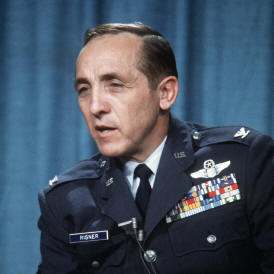
CCP and POW James Robinson "Robbie" Risner

Before the Communist Chinese Party (CCP) decides to take their multi-layered attack on the United States of America to a kinetic state, they
 need to understand who we Americans are...and they do not.

We know the CCP is flooding the US with gun receivers to convert semi-automatic weapons to automatic, fentynal, heroin, counterfeit US one dollar bills (by the millions), providing walkabout election bribe money to in the 2020 election, ...well, the web of their influence is breathtaking. 

But they overestimate their influence.

You are delusional in your thinking that the politicians, businessmen, Hollywood producers and actors, Maoist academics in our universities, and their proxy armies of BLMCNNANTIFADNC can be used to dominate Americans. 

To make informed decisions about how to use that awesome CCP military might, all you CCP leaders need to know about millions of other Americans...like James Robinson "Robbie" Risner.

CCP People's Liberation Army Generals need to read The Passing of the Night: My Seven Years as a Prisoner of the North Vietnamese by General Robinson Risner.

Or just read just the dedication.

"To the American fighting men who died defending beliefs that we POWs were imprisoned for.

To the wives of the POWs who suffered and gave much more than we.

And to the youth of America whose honesty and integrity make me confident and optimistic about the future of our nation."

We have millions of men like General Risner. They are active duty military. And millions of others are VETS. We are tactically brilliant, hardened, tested in battle, and highly networked. You have no idea who we are, where we are, or what we are capable of doing to your plans of world domination.

Donald Trump, of course, knows well your plans and is countermanding them daily with our advice and assistance. We all have an expertise. Mine is civil defense.

You once had a robust civil defense. But CCP systematic bribe taking destroyed it. How else explain that you converted your excellent bomb shelters in Peiking to condos for CCP millionaires and billionaires.

The mistake of so many rising powers is that they strike before they have overwhelming power to defeat their adversary. China's 10,000 year history of warfare has many such examples. 

Be Best CCP. Listen to your more learned who are advising you not to continue to provoke the United States.

Remember always, we control the world's food supply...including China's.

Remember what happens to every Chinese Dynasty that cannot feed the Chinese people. That reality applies even to the mighty CCP.

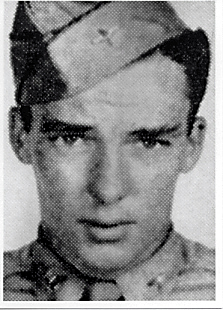
Name: James Robinson "Robbie" Risner

Rank/Branch: O5/US Air Force
Unit: 67th TFS
Date of Birth: (ca 1924)
Home City of Record: Tulsa OK (resided Oklahoma City OK)
Date of Loss: 16 September 1965
Country of Loss: North Vietnam
Loss Coordinates: 195700N 1055300E (WG959949)
Status (in 1973): Released POW
Category:
Acft/Vehicle/Ground: F105D
Missions: 55
NOTE: Risner was a Korean War "Ace" flying the F-86 with 110 missions

RIP 10/22/2013

Source: Compiled from one or more of the following: raw data from U.S.
Government agency sources, correspondence with POW/MIA families,
published sources, interviews. Updated by the P.O.W. NETWORK in 2017.

Personnel In Incident: April 3 1965: Herschel S. Morgan; Raymond A. Vohden
(released POWs); George C. Smith (missing). April 4, 1965: Walter F.
Draeger; James A. Magnusson (missing); Carlyle S. Harris (released POW);
September 16, 1965: J. Robinson Risner (released POW); May 31, 1966: Bobbie
J. Alberton; William R. Edmondson; Emmett McDonald; Armon Shingledecker;
Philip J. Stickney; (missing from the C-130E); Thomas Case; Harold J. Zook;
Elroy Harworth (remains returned from the C130E). Dayton Ragland; Ned
Herrold (missing on an F-4C)

REMARKS: 730212 RELSD BY DRV

SYNOPSIS: The Thanh Hoa Railroad and Highway Bridge, spanning the Song Ma
River, is located three miles north of Thanh Hoa, the capital of Annam
Province, North Vietnam. It is a replacement for the original French-built
bridge destroyed by the Viet Minh in 1945 - they simply loaded two
locomotives with explosives and ran them together in the middle of the
bridge.

In 1957, the North Vietnamese rebuilt the bridge. The new bridge, completed
in 1964, was 540 feet long, 56 feet wide, and about 50 feet above the river.
The Vietnamese called it Ham Rong (the Dragon's Jaw), and Ho Chi Minh
himself attended its dedication. The bridge had two steel thru-truss spans
which rested in the center on a massive reinforced concrete pier 16 feet in
diameter, and on concrete abutments at the other ends. Hills on both sides
of the river provided solid bracing for the structure. Between 1965 and
1972, eight concrete piers were added near the approaches to give additional
resistance to bomb damage. A one-meter guage single railway track ran down
the 12 foot wide center and 22 foot wide concrete highways were cantilevered
on each side. This giant would prove to be one of the single most
challenging targets for American air power in Veitnam. 104 American pilots
were shot down over a 75 square mile area around the Dragon during the war.
(Only the accounts of those specifically known to be involved in major
strikes against the bridge are given here. Some losses were aircraft
involved in operations against other targets. Note also, that because
aircraft came in on this target from a wide geographic area, some personnel
lost outside the 75 mile range may have been inadvertently overlooked in
this study.)

In March 1965 the decision to interdict the North Vietnamese rail system
south of the 20th parallel led immediately to the April 3, 1965 strike
against the Thanh Hoa Bridge. Lt.Col. Robinson Risner was designated overall
mission coordinator for the attack. He assembled a force consisting of 79
aircraft - 46 F105's, 21 F100's, 2 RF101's and 10 KC135 tankers. The F100's
came from bases in South Vietnam, while the rest of the aircraft were from
squadrons TDY at various Thailand bases.

Sixteen of the 46 "Thuds" (F105) were loaded with pairs of Bullpup missiles,
and each of the remaining 30 carried eight 750 lb. general purpose bombs.
The aircraft that carried the missiles and half of the bombers were
scheduled to strike the bridge; the remaining 15 would provide flak
suppression. The plan called for individual flights of four F105's from
Koran and Takhli which would be air refueled over the Mekong River before
tracking across Laos to an initial point (IP) three minutes south of the
bridge. After weapon release, the plan called for all aircraft to continue
east until over the Gulf of Tonkin where rejoin would take place and a Navy
destroyer would be available to recover anyone who had to eject due to
battle damage or other causes. After rejoin, all aircraft would return to
their bases, hopefully to the tune of "The Ham Rong Bridge if falling down."

Shortly after noon on April 3, aircraft of Rolling Thunder Mission 9-Alpha
climbed into Southeast Asia skies on their journey to the Thanh Hoa Bridge.
The sun glinting through the haze was making the target somewhat difficult
to acquire, but Risner led the way "down the chute" and 250 pound missiles
were soon exploding on the target. Since only one Bullpup missile could be
fired at a time, each pilot had to make two firing passes.                                      

On his second pass, LtCol. Risner's aircraft took a hit just as the Bullpup
hit the bridge. Fighting a serious fuel leak and a smoke-filled cockpit in
addition to anti-aircraft fire from the enemy, he nursed his crippled
aircraft to Da Nang and to safety. The Dragon would not be so kind on
another day.

The first two flights had already left the target when Capt. Bill Meyerholt,
number three man in the third flight, rolled his Thunderchief into a dive
and sqeezed off a Bullpup. The missile streaked toward the bridge, and as
smoke cleared from the previous attacks, Capt. Meyerholt was shocked to see
no visible damage to the bridge. The Bullpups were merely charring the heavy
steel and concrete structure. The remaining missile attacks confirmed that
firing Bullpups at the Dragon was about as effective as shooting BB pellets
at a Sherman tank.

The bombers, undaunted, came in for their attack, only to see their payload
drift to the far bank because of a very strong southwest wind. 1Lt. George
C. Smith's F100D was shot down near the target point as he suppressed flak.
The anti-aircraft resistance was much stronger than anticipated. No radio
contact could be made with Smith, nor could other aircraft locate him. 1Lt.
Smith was listed Missing In Action, and no further word has been heard of
him.

The last flight of the day, led by Capt. Carlyle S. "Smitty" Harris,
adjusted their aiming points and scored several good hits on the roadway and
super structure. Smitty tried to assess bomb damage, but could not because
of the smoke coming from the Dragon's Jaw. The smoke would prove to be an
ominous warning of things to come.

LtCdr. Raymond A. Vohden was north of the Dragon when his A4C bomber was
shot down. Ray was captured by the North Vietnamese and held in various POW
camps in and near Hanoi until his release in February 1973. (It is not
entirely clear that this U.S. Navy Lt.Cdr. had a direct role in the attack
on the bridge, but was probably "knocked out" by the same anti-aircraft
fire.)

Capt. Herschel S. Morgan's RF101 was hit and went down some 75 miles
southwest of the target area, seriously injuring the pilot. Capt. Morgan was
captured and held in and around Hanoi until his release in February 1973.

When the smoke cleared, observer aircraft found that the bridge still
spanned the river. Thirty-two Bullpups and ten dozen 750 pound bombs had
been aimed at the bridge and numerous hits had charred every part of the
structure, yet it showed no sign of going down. A restrike was ordered for
the next day.

The following day, flights with call signs "Steel", "Iron", "Copper",
"Moon", "Carbon", "Zinc", "Argon", "Graphite", "Esso", "Mobil", "Shell",
"Petrol", and the "Cadillac" BDA (bomb damage assessment) flight, assembled
at IP to try once again to knock out the Dragon. On this day, Capt. Carlyle
"Smitty" Harris was flying as call sign "Steel 3". Steel 3 took the lead and
oriented himself for his run on a 300 degree heading. He reported that his
bombs had impacted on the target on the eastern end of the bridge. Steel 3
was on fire as soon as he left the target. Radio contact was garbled, and
Steel Lead, Steel 2 and Steel 4 watched helplessly as Smitty's aircraft,
emitting flame for 20 feet behind, headed due west of the target. All flight
members had him in sight until the fire died out, but observed no parachute,
nor did they see the aircraft impact the ground. Smitty's aircraft had been
hit by a MiG whose pilot later recounted the incident in "Vietnam Courier"
on April 15, 1965. It was not until much later that it would be learned that
Smitty had been captured by the North Vietnamese. Smitty was held prisoner
for 8 years and released in 1973. Fellow POWs credit Smitty with introducing
the "tap code" which enabled them to communicate with each other.

MiG's had been seen on previous missions, but for the first time in the war,
the Russian-made MiGs attacked American aircraft. Zinc 2, an F105D flown by
Capt. James A. Magnusson, had its flight bounced by MiG 17's. As Zinc Lead
was breaking to shake a MiG on his tail, Zinc 2 was hit and radioed that he
was heading for the Gulf if he could maintain control of his aircraft. The
other aircraft were busy evading the MiGs, and Magnusson radioed several
times before Steel Lead responded and instructed him to tune his radio to
rescue frequency. Magnusson's aircraft finally ditched over the Gulf of
Tonkin near the island of Hon Me, and he was not seen or heard from again.
He was listed Missing In Action.

Capt. Walter F. Draeger's A1H (probably an escort for rescue teams) was shot
down over the Gulf of Tonkin just northeast of the Dragon that day.
Draeger's aircraft was seen to crash in flames, but no parachute was
observed. Draeger was listed Missing In Action.

The remaining aircraft returned to their bases, discouraged. Although over
300 bombs scored hits on this second strike, the bridge still stood.

From April to September 1965, 19 more pilots were shot down in the general
vicinity of the Dragon, including many who were captured and released,
including Howie Rutledge, Gerald Coffee, Paul Galanti, Jeremiah Denton, Bill
Tschudy and James Stockdale. Then on September 16, 1965, Col. Robbie
Risner's F105D was shot down a few miles north of the bridge he had tried to
destroy the previous April. As he landed, Risner tore his knee painfully, a
condition which contributed to his ultimate capture by the North Vietnamese.
Risner was held in and around Hanoi until his release in 1973, but while a
POW, he was held in solitary confinement for 4 1/2 years. Besides the normal
malaise and illnesses common to POWs, Risner also suffered from kidney
stones, which severely debilitated him in the spring and summer of 1967.

By September 1965, an innovative concept had taken shape - mass-focusing the
energy of certain high explosive weapons. The Air Force quickly saw its
application against the old Dragon and devised a plan to destroy the bridge
using the new weapon. They would call the operation "Carolina Moon".

The plan necessitated two C130 aircraft dropping the weapon, a rather large
pancake-shaped affair 8 feet in diameter and 2 1/2 feet thick and weighing
5,000 pounds. The C130's would fly below 500 feet to evade radar along a 43
mile route (which meant the C130 would be vulnerable to enemy attack for
about 17 minutes), and drop the bombs, which would float down the Song Ma
River where it would pass under the Dragon's Jaw, and detonate when sensors
in the bomb detected the metal of the bridge structure.

Because the slow-moving C130's would need protection, F4 Phantoms would fly
diversionary attack to the south, using flares and bombs on the highway just
before the C130 was to drop its ordnance. The F4s were to enter their target
area at 300', attack at 50' and pull off the target back to 300' for
subsequent attacks. Additionally, an EB66 was tasked to jam the radar in the
area during the attack period. Since Risner had been shot down in September,
15 more pilots had been downed in the bridge region. Everyone knew it was
hot.

The first C130 was to be flown by Maj. Richard T. Remers and the second by
Maj. Thomas F. Case, both of whom had been through extensive training for
this mission at Elgin AFB, Florida and had been deployed to Vietnam only 2
weeks before. Ten mass-focus weapons were provided, allowing for a second
mission should the first fail to accomplish the desired results.

Last minute changes to coincide with up-to-date intelligence included one
that would be very significant in the next days. Maj. Remers felt that the
aircraft was tough enough to survive moderate anti-aircraft artillery hits
and gain enough altitude should bail-out be necessary. Maj. Case agreed that
the aircraft could take the hits, but the low-level flight would preclude a
controlled bail-out situation. With these conflicting philosophies, and the
fact that either parachutes or flak vests could be worn - but not both -
Maj. Remers decided that his crew would wear parachutes and stack their flak
vests on the floor of the aircraft. Maj. Case decided that his crew would
wear only flak vests and store the parachutes.

On the night of May 30, Maj. Remers and his crew, including navigators Capt.
Norman G. Clanton and 1Lt. William "Rocky" Edmondson, departed Da Nang at 25
minutes past midnight and headed north under radio silence. Although the
"Herky-bird" encountered no resistance at the beginning of its approach,
heavy, (although luckily, inaccurate) ground fire was encountered after it
was too late to turn back. The 5 weapons were dropped successfully in the
river and Maj. Remers made for the safety of the Gulf of Tonkin. The
operation had gone flawlessly, and the C130 was safe. Although the
diversionary attack had drawn fire, both F-4's returned to Thailand
unscathed.

Unfortunately, the excitement of the crew was shortlived, because recon
photos taken at dawn showed that there was no noticeable damage to the
bridge, nor was any trace of the bombs found. A second mission was planned
for the night of May 31. The plan for Maj. Case's crew was basically the
same with the exception of a minor time change and slight modification to
the flight route. A crew change was made when Maj. Case asked 1Lt.
Edmondson, the navigator from the previous night's mission, to go along on
this one because of his experience from the night before. The rest of the
crew included Capt. Emmett R. McDonald, 1Lt. Armon D. Shingledecker, 1Lt.
Harold J. Zook, SSgt. Bobby J. Alberton, AM1 Elroy E. Harworth and AM1
Philip J. Stickney. The C130 departed DaNang at 1:10 a.m.

The crew aboard one of the F4's to fly diversionary included Col. Dayton
Ragland. Ragland was no stranger to conflict when he went to Vietnam. He had
been shot down over Korea in November 1951 and had served two years as a
prisoner of war. Having flown 97 combat missions on his tour in Vietnam,
Ragland was packed and ready to go home. He would fly as "backseater" to
1Lt. Ned R. Herrold on the mission to give the younger man more combat
flight time while he operated the sophisticated technical navigational and
bombing equipment. The F4's left Thailand and headed for the area south of
the Dragon.

At about two minutes prior to the scheduled C130 drop time, the F4's were
making their diversionary attack when crew members saw anti-aircraft fire
and a large ground flash in the bridge vicinity. Maj. Case and his crew were
never seen or heard from again. During the F4 attack, Herrold and Ragland's
aircraft was hit. On its final pass, the aircraft did not pull up, but went
out to sea, and reported that the aircraft had taken heavy weapons fire. A
ball of fire was seen as the plane went into the sea.

Reconnaissance crews and search and rescue scoured the target area and the
Gulf of Tonkin the next morning, finding no sign at all of the C130 or its
crew. Rescue planes spotted a dinghy in the area in which Herrold and
Ragland's aircraft had gone down, but saw no signs of life. The dinghy was
sunk to prevent it falling into enemy hands. The bridge still stood.

In March 1967, the U.S. Navy attacked the Thanh Hoa Bridge using the new
"Walleye" missiles, but failed to knock out the bridge. Before the war
ended, 54 more Americans fell in the Dragon's Jaw area.

In late 1986 the remains of Harworth, Zook and Case were returned and buried
with the honor befitting an American fighting man who has died for his
country. Ragland, Herrold, Alberton, McDonald, Edmondson, Shingledecker,
Stickney, Smith, Draeger and Magnussen are still Missing in Action.

~~~~~~~~~~~~~~~~~~~~~~~~~~~~~~~~~~~~~~~~~~~~~~~~~~

Homecoming 1973

~~~~~~~~~~~~~~~~~~~~~~~~~~~~~~~~~~~~~~~~~~~~~~~~~~~

SOURCE: WE CAME HOME  copyright 1977
Captain and Mrs. Frederic A Wyatt (USNR Ret), Barbara Powers Wyatt, Editor
P.O.W. Publications, 10250 Moorpark St., Toluca Lake, CA 91602
Text is reproduced as found in the original publication (including date and
spelling errors).

ROBINSON RISNER
Colonel - United States Air Force
Shot Down: September 16, 1965
Released: February 12, 1973

I am 48 years old, married, and have five boys-the oldest is 25 and the
youngest 12. My oldest son delayed his wedding for two years until I could be
his best man. He was married on Armed Forces Day 1973.

I entered the Air Force in 1943 as an Aviation Cadet and flew fighters during
World War II, but saw no combat. I was very active in the Oklahoma Air
National Guard from the time I left active duty in 1946 until I was recalled
in 1951 for the Korean crisis. In Korea I flew F-86's against the communist
MIGS-bagging eight of them.

I was shot down twice over North Vietnam. The second time I was captured and
interned from 16 September 1965 until 12 February 1973.

During my imprisonment the things that sustained me to the greatest extent
were my faith in God, the American people, my Commander-in-Chief, my fellow
POW's, and my wonderful wife. I never lost hope, and never did I despair of
coming back alive. I believe, as do all of the other men who were imprisoned
in North Vietnam, that we came back stronger, better men. I think we consider
ourselves better in that we are now more perceptive. We have a greater degree
of compassion and understanding, and hopefully, we are kinder and more
thoughtful in our daily encounters with our fellowmen.

One of our biggest morale boosters while imprisoned was word that the American
people had demanded that the North Vietnamese treat us as human beings. I
believe that it is a definite fact that the beneficial change in our
treatment, which started in October of 1969 and steadily improved until our
release, was due to the efforts of the American people.

We will never know how much VIVA did for us and our families. We can only say
in all humility, sincerity, and with thanksgiving, "God bless you - the Ross
Perots, the Bob Hopes, and all of the others who hung tough and put their
shoulder to the wheel for us when the chips were down."

Editor's Note: A book entitled "The Passing of the Night" describing Colonel
Risner's experiences, has been published by Random House.

========================

Robinson Risner retired from the United States Air Force as a Brig. General.
He and his wife Dot reside in Texas.

============
AFA Magazine
May 1998, Vol. 81, No. 5

By John L. Frisbee, Contributing Editor

When Push Came to Shove

Deep over North Korea, Robbie Risner's wingman was hit by flak that disabled
his F-86. Getting him to safety called for heroic measures. Brig. Gen.
Robinson Risner's heroism during seven and a half years of imprisonment and
torture in North Vietnam is legendary. Less known is the fact that he was a
jet ace in Korea with eight confirmed victories. Few are aware, at least in
detail, of an incredible feat of flying performed over North Korea by Robbie
Risner in an attempt to save the life of another=  pilot. That
courageous act is dismissed with a couple of sentences in Risner's book The
Passing of the Night.

Risner's career as a fighter pilot began in Panama, where he whiled away the
World War II years. When peace came, he joined the Oklahoma Air Guard. His
squadron was called to active duty during Korea and began transitioning from
P-51s to F-80s but with no immediate prospects of getting into the war. With
the bare required minimum of 100 hours of jet time, Risner volunteered for
combat duty as a photorecce pilot, arriving in Korea on May 10, 1952. Three
weeks later, he wangled his way into the famous 4th Fighter Wing at Kimpo
and into F-86s, the world's best fighter at that time. On Sept. 21, the
fast-learning Captain Risner became our 20th jet ace.

A few weeks later while escorting fighter-bombers in an attack on
a chemical plant along the Yalu River, Risner tangled with what he describes
as the finest fighter pilot he ever encountered. From 30,000 feet to the
deck they went, with Risner scoring several solid hits, then across the Yalu
into forbidden territory and down the runway of a Chinese airfield where the
damaged MiG-15 crashed. All the while, Robbie's wingman, Lt. Joe Logan,
stayed with the fight, protecting his leader.

As they climbed back across the Yalu near Antung, Logan's F-86 took a burst
of flak. Fuel and hydraulic fluid poured out the belly of his aircraft. With
only five minutes' fuel left, he would, it seemed, have to bail out in enemy
territory. But Robbie Risner was not about to lose a fine wingman who was
also a close friend.

"A typical fighter pilot," says General Risner, "thinks less about risk than
about his objective," and Risner's objective was to keep Joe Logan out of
enemy hands. Jet ace Risner immediately embarked on an undeniably high-risk
venture to achieve that objective. The Air Force had a rescue detachment at
Cho Do Island, about 60 miles to the south-and with plenty of flak en route.
Risner decided to try something that, to his knowledge, had never been done
successfully before. He would push the damaged F-86 to Cho Do, where Logan
could bail out safely.

Risner told Logan to shut down his engine, now almost out of fuel. Then he
gently inserted the upper lip of his air intake into the tailpipe of Logan's
F-86. "It stayed sort of locked there as long as we both maintained stable
flight, but the turbulence created by Joe's aircraft made stable flight for
me very difficult. There was a point at which I was between the updraft and
the downdraft. A change of a few inches ejected me either up or down,"
Risner, now retired and living in Austin, Texas, recalls.

Each time Risner re-established contact between the battered nose of
his F-86 and Logan's aircraft was a potential disaster that was made even
more likely by the film of hydraulic fluid and jet fuel that covered his
windscreen and obscured his vision. It was, one imagines, something like
pushing a car at 80 miles an hour down a corduroy road in a heavy fog.

Miraculously, Risner nudged Joe Logan's F-86 all the way to Cho Do,
maintaining an airspeed of 190 knots and enough altitude to stay out of
range of automatic weapons. Near the island, Logan bailed out, landing in
the water near shore. Ironically, Risner's heroic effort ended in
tragedy. Although Logan was a strong swimmer, he became tangled in his chute
lines and drowned before rescuers could reach him. But the measure of a
heroic act lies not in success. It lies in the doing.

After Korea, Robbie Risner's Air Force career continued to be marked by acts
of physical and moral courage, culminating in his leadership of American
POWs during those long years in Hanoi's prisons.

The standards of valor, loyalty, and dedication he set for himself, and met
superbly throughout his years in uniform, have established a goal to be
sought by generations of airmen yet to come.

There have been many requests over the years to rerun some of author
Frisbee's earliest "Valor" pieces. This one was published in December 1983.
Published May 1998. For presentation on this web site, some Valor articles
have been amended for accuracy.

=================================
Sunday, November 18, 2001

Former POW honored at Air Force Academy

By COLLEEN SLEVIN
The Associated Press

The senior ranking U.S. officer held at the notorious North Vietnamese POW
camp known as the "Hanoi Hilton" is honored at the Air Force Academy. A
retired general who united and inspired fellow prisoners of war in Vietnam's
"Hanoi Hilton" for more than seven years was honored with a statue Friday on
the Air Force Academy's grounds in Colorado.....

======================================

COLORADO SPRINGS, Colo. (AFPN) -- A war hero, flying ace and survivor of
seven and-a-half years as a prisoner of war in Vietnam was recognized with a
permanent statue in his honor here Nov. 16.

Retired Brig. Gen. Robinson Risner, who flew in World War II, the Korean
War and the Vietnam conflict, said the special attention leaves him
awe-struck.

"I'm a bit embarrassed to have been chosen for the statue here that
represents all POWs," he said.  "It still leaves me in awe."

H. Ross Perot donated the 9-foot statue, which is on display in the Air
Garden here.

"All men who served with him in Vietnam in the prison camps, when they came
home and talked to me, would point to him (Risner) and say, 'He's the only
reason I survived,'" Perot said.

As the former POWs told stories about Risner, one story kept coming up,
Perot said.

In violation of Vietnamese POW rules, Risner, who was the senior officer
within the camp,  set up church services complete with hymns prisoners wrote
on toilet tissue. In the middle of a hymn, the Vietnamese came in and
grabbed Risner to take him back to solitary confinement.  As he was led
away, fellow POWs stood and sang a "strictly forbidden song," Perot said.
"That song was the 'Star Spangled Banner.'"

Risner told Perot years later that, at that moment, pride in his men made
him "feel nine feet tall and as though he could have gone bear hunting with
a switch."

Placement of the statue here will remind cadets what an Air Force officer is
supposed to be, Perot said.

==========================================================

Oct 22, 2013

"Today about noon Eastern time, Robbie Risner died.
 According to Deborah, Robbie's stepdaughter, he had had several small
strokes but recovered from each, until this last one, a major stroke last
Saturday, and he died today in his sleep. 
Nothing is known yet about services...Arlington is assumed but there is a
waiting period."
JL

All our prayers are with the Risner Family. This is a great loss to our nation.

Mary Schantag, Chairman
pownetwork.org


Robinson Risner, Air Force ace and POW, dies at 88Washington Post (blog)
Risner received the first of two Silver Stars for his heroics and was one of only four airmen in history to
receive more than one Air Force Cross, second only to the 
...


http://www.nytimes.com/2013/10/28/us/robinson-risner-ace-fighter-pilot-dies-at-88.html?nl=todaysheadlines


10/25/2013 02:10 PM CDT

Departed Fighter Pilot Leaves Lasting Impact on Air Force

By Claudette Roulo
American Forces Press Service

WASHINGTON, Oct. 25, 2013 - The nation lost a great hero with the passing of retired Air Force Brig. Gen. James Robinson "Robbie" Risner, Defense Secretary Chuck Hagel said today....

BGen Robbie Risner will be buried at Arlington on January 23rd at 11:00.


On behalf of Gen Mark A. Welsh III, Chief of Staff


Fellow Airmen,

Brigadier General Robinson "Robbie" Risner, Air Force's 20th Ace and former POW, will be laid to rest in Arlington National Cemetery Thursday, 23 January 2014 at 1100.


This is a great opportunity to experience Air Force history and a legend with regards to his leadership, sacrifices, service, and his excellence. 

Mr. Ross Perot, and I will be speaking at the service.  Shuttle bus service will be provided for Airmen and others interested in attending this ceremony.  This shuttle service is provided by a Veterans' service organization at no expense to DoD.  We have 270 seats on 5 buses available from the Pentagon to Arlington National Cemetery.  Seats will be available on first come, first serve basis.  Buses will be located at corridors 2 & 3 starting at 1015 and will leave at 1030.  You will be returned to this location around 1230, after the interment at Arlington National Cemetery.


If you have alternate transportation to Arlington National Cemetery, you can join the buses at the staging area on Memorial Drive just inside Arlington National Cemetery.  The Procession will gather at 1055 and drive to gravesite.   Dress code for Arlington services is the following:  
Military Service Dress/Class A uniform, flight cap or service cap (optional); Civilians, Business attire.


BG Risner joined the U.S. Army Air Corps in April 1943 and served in the Air Force until August 1976.   Throughout his 33 years of service, BG Risner was one of the most celebrated pilots in the Air Force. He became the Air Force's 20th Ace after he shot down eight MiG-15s in the Korean War.  He received the Silver Star for a daring mid-air maneuver attempting to steer a fellow pilot to safety.  During the Vietnam War, he led the first flight of Operation Rolling Thunder, a high-intensity aerial bombing of North Vietnam.


He received the Air Force Cross in April 1965 for leading air strikes against a strategic bridge in North Vietnam.  And, on 16 September 1965, during a raid over North Vietnam, his F-105 Thunderchief was hit by ground fire and he was held captive for seven and a half years (three years in isolation) in Hoa Lo Prison, a.k.a. Hanoi Hilton.  He later received the Air Force Cross for his leadership as a POW and was voted by fellow POWs as one of the top leaders of that incarceration along with Admiral James B. Stockdale.


Every Airman has a story. Robbie Risner's was an exceptional one that we all should be proud of and honor.


01/26/2014

Robbie's service was extremely well conducted on  a bitterly cold but sunshine-filled day.  


For the POWs, wives, and friends, the service started at the Ft. Myer Officers Club where Ross Perot greeted us on arrival. 

While at the club we had time to pay our respects and give our condolences to Dot Risner, the family, and their invited guests.


We then boarded two busses (paid for by the NAM POWs) for the Memorial Chapel where Ross Perot and USAF Chief of Staff, General Welch, gave a superb and emotional eulogy.  


The chapel portion standing room only and was very moving with a lot of blue suits and 27 former POWS, plus another 5 or so family members of POWS/KIAS deceased that I can recall.  A bus load of 336 Fighter Squadron members (Robbie's Korean War Squadron) from Seymour Johnson AFB, NC and a lot of River Rats were there too. The USAF personnel performed the ceremonial aspects extremely well. 


Five additional busses of USAF personnel from the Pentagon joined us outside the chapel for the procession to Arlington National Cemetery.  


The long line of VIPs, seven busses, and numerous POVs traveled to ANC where the casket was transferred onto the caisson for transport to the gravesite. Precisely at our gravesite arrival four F-15E's from the 336 FS performed a flawless Missing Man formation.


After the traditional burial with honors for a General Officer, the Risner family returned to the Ft. Myer Officers Club for a private family lunch.


The ceremony was a sobering reminder of how honorable, stoic, dignified, and significant a leader Robbie Risner was and how deeply he cherished and loved his wife and family.  A true patriot has joined our many other honorable NAM POWs.


GBU Robbie.


This is a great piece by Chuck Boyd on Robbie Risner. Chuck told me that it would be in today's American Interest.
Chuck, himself, is a true American hero.
 
He is also a member of that infamous Air War College Class of 1977. 
Check 6,
Dave

Robbie Risner, R.I.P.

Published on January 24, 2014

January 16, 1925 – October 22, 2013

Though I had long known of Robbie Risner, fighter pilot extraordinaire, Korean War ace, first living recipient of the Air Force Cross recently featured on the cover of Time magazine, I did not actually know him. But when I heard his whispered voice under a rusty steel door in a prison cellblock called “Heartbreak Hotel,” I knew instantly who it was, and I felt, at some mystical level, oddly comforted. Yesterday, standing beside his casket at Arlington National Cemetery to pay my final respects, though sad, I again felt comforted. There was something about this man’s presence, even in death, that was reassuring.

James Robinson Risner was a man of humble origins, son of an Arkansas sharecropper, educated at secondary school level, not particularly ambitious, a common man save for two things: He could fly the hell out of an airplane; and, under terribly difficult circumstances as a prisoner of war in North Vietnam, he rose to a level of heroic leadership matched by few men in American military history.

Raised in a religious family, Risner made his first critical life choice between attending Bible College or joining the Army Air Forces during World War II. When he passed the tough entrance exam for pilot training by one point, he took it as a vector from God, and his future aloft was set.

Flying came easily to the gifted trainee, which led to a coveted assignment flying fighters after graduation. But Robbie’s repeated requests for combat duty were ignored by the Army’s personnel system, and he spent the rest of the war defending the Panama Canal.

Postwar peace and return to civilian life brought mundane employment for Risner as an auto mechanic, a service station manager and a short stint running a service garage. What mattered to him was the chance to fly P-51s with the Oklahoma Air National Guard, a path that would continue leading toward his destiny.

It was the Korean War that put Robbie Risner’s name on the map of aerial warriors of that era, and became what he described decades later as the most gratifying period of his life. He finagled his way out of his recalled Guard unit into a front line air combat Group equipped with the best aircraft of the period, and paid back the favor by shooting down 8 MIGs. He also pulled off other incredible feats of airmanship. He once pushed the damaged and fuel-starved plane of his wingman with the nose of his own aircraft out of hostile skies into friendly territory for a safe bailout. That is the stuff of which legends are made.

While the Korean War may have been Risner’s favorite period, it was by no means the most consequential in the lives of others. It would take another war, and an extraordinary set of circumstances for that to occur.

As storm clouds gathered over Southeast Asia in 1964, Risner arrived in the region, as if on cue, to take command of a fighter-bomber squadron in preparation for the larger war nearly everyone saw coming. Air warfare over North Vietnam began in earnest in February 1965, and for Risner ended on September 16 of that same year. Between those dates he flew 55 combat missions wreaking havoc on targets the length and breadth of the country. He was shot down by ground fire once (but not captured), received the Air Force Cross and made the cover of Time. He became in the eyes of others in the business one of two things: the perfect role model, or just plain crazy. All, however, held him in awe.

Then, in the most unlikely circumstances, came true greatness. Sometimes in history a man emerges whom no one saw coming, one who rises to the awful challenge of crisis leadership when others are faltering, and provides exactly the right strength of character, calming influence, and credible guidance out of the morass. But first he must earn the respect and commitment of his subordinates by demonstrating a personal willingness to assume any risk, physical or moral, that he might later ask of his followers.

Joshua Lawrence Chamberlain was one such a man. A shy young professor with a speech impediment who taught modern languages at Bowdoin College before volunteering for Union service in the Civil War, who lacked even basic military knowledge. But he schooled himself quickly to a remarkable level of competency, helping to raise and later command the 20th Maine. Fate placed Chamberlain and the 20th Maine on Gettysburg’s crucial high ground on July 2, 1863, ground that both sides needed for victory on the following day. Against long odds, the Maine regiment repelled multiple assaults by Confederate forces. Then, out of ammunition, with only bayonets left, a wounded Chamberlain with saber swinging inspired the counterattack that saved Little Round Top, making possible the next day’s Union victory—and, eventually, victory in the war itself.

Ernest Shackleton also comes to mind. A competent British seaman with a taste for adventure, but with no prior demonstration of compelling leadership, Shackleton’s handling of a disaster-ridden Antarctic expedition in the early 20th century unquestionably rises to a level of near-incredible leadership. With half of his expedition stranded on one side of the continent, and the other half imprisoned on a tiny barren island after their ship was crushed by massive ice convulsions, rescue seemed out of the question. Unwilling to give up or to let his crew do so, Shackleton set out in a 20-foot wooden life boat salvaged from the doomed mother ship across 800 miles of violent seas to a whaling station on South Georgia Island. Fifteen days later, after surviving hurricane force seas that sank a 500-ton ship in his vicinity, he reached his objective, then organized and led rescue operations to save his men in both locations.

Robinson Risner earned a place along side these and other unexpected giants of history. Following being shot down a second time and then captured, his arrival in the old French dungeons of Hanoi began the trial of his life, but also the leadership role that would be his legacy. It didn’t take long for his captors to realize who they had, for they obviously read Time magazine, too. They told Risner there were only three people they would rather have as a captive: Lyndon Johnson, Robert McNamara or Dean Rusk. For the next 7½ years Robbie absorbed levels of torture and abuse those three could likely never have grasped, let alone endured.

At the time of Robbie’s capture there were 27 other Americans incarcerated in Hanoi, separated from each other, all doing their best to abide by the Code of Conduct for American Fighting Men. Once Risner determined that he was the Senior Ranking Office, he began to put structure and guidance into the POWs’ lives, a sense of order and community, the very thing their captors were trying desperately to prevent. He would pay a terrible price for that leadership when the guards would catch him communicating, but they couldn’t stop him. No matter how brutal the beatings, the next day he would be at it again.

In the early days he was generally held in that small cell block mentioned earlier, and since most new prisoners were held there temporarily, after initial interrogation and torture sessions, Risner used brief moments of guard absence to “induct” new men into his POW command. His message to me as I lay on the floor of my cell, straining to hear his every word, remain burned into my brain even now, almost 48 years later: He told me his name, and asked mine and my rank. Then he said: “You must learn the tap code, and here’s how it works…..memorize it, and practice it, it’s vital.” And he added: “Eat everything they give you, no matter how disgusting; it’ll keep you alive. You’ve just been tortured, and that’s not the end of it; resist to the limits of your sanity, or to permanent physical damage. You’ll know when you get there.” And he concluded: “And pray; if you haven’t been, start. We’re going to get through this, and I’ll see you when it’s over.”

Later on as the POW organization grew, and prisoners were taken to other prisons throughout the country, Risner’s guidance would expand and continue to spread. Always it would make sense, be crisp and to the point. It was never threatening, always gentle and optimistic, like a loving father giving guidance to his son. Yet all he did remained in a military framework, based on the core principle that we were fighting men with a code of honor that must be upheld.

Risner became the inspiration for all of us confused and scared young men in a very hostile environment. He was a guiding presence, a behavior yardstick, and he managed to achieve this without direct contact. He somehow conveyed in a bizarre, tap code communication system what was the right thing to do in order to survive with dignity and honor. None of us quite measured up to his standard, most likely. But there is no doubt in my mind that every last one of us stood taller in his shadow, tougher in our resistance, and came home better men as a result.

May God bless you Robbie Risner, and may you rest in peace.

Charles G. Boyd (Gen. USAF-Ret.), POW, 22 April 1966 - 12 Feb. 1973 

BG James Robinson "Robbie" Risner has been selected for Induction into the OMHF.  Induction will take place on 8 Nov 2014 in Oklahoma City, OK. 

Oklahoma Military Hall of Fame 


Oklahoma Military Heritage Foundation

 r039.jpg (20175 bytes)